Blisters form when repeated friction between your skin and shoe creates heat and moisture, causing the outer layer of skin to separate and fill with fluid. The best way to avoid blisters while running is to eliminate friction through proper-fitting shoes, moisture management, and skin protection—a combination approach that addresses all three causes simultaneously. Most runners can prevent blisters almost entirely by implementing these strategies before they start experiencing painful lesions.
The challenge with blister prevention is that it requires attention to multiple variables at once. A runner might have perfect shoes but sweat excessively, or might manage moisture well but wear shoes that are too tight in the heel. Sarah, an ultramarathon runner, discovered this the hard way when her first 50-mile race left her with blisters despite wearing expensive trail shoes. She later realized the problem wasn’t the shoes themselves—it was that she hadn’t accounted for her feet swelling during the long run and hadn’t managed moisture with the right socks.
Table of Contents
- What Causes Blisters During Running?
- Choosing the Right Running Shoes and Fit
- Moisture Management and Sock Selection
- Applying Preventive Products and Techniques
- Addressing Sweat Management During Runs
- Breaking In New Shoes Properly
- Long-Term Blister Prevention Strategy
- Conclusion
- Frequently Asked Questions
What Causes Blisters During Running?
Understanding the mechanics of blister formation helps you address prevention systematically. Blisters develop through a combination of friction, heat, and moisture. When your foot slides inside your shoe repeatedly, the epidermis (top layer of skin) separates from the dermis below it. Sweat and moisture reduce friction coefficients between skin and sock, which paradoxically increases sliding. Meanwhile, the heat generated during running accelerates this process—studies show that blistering risk increases significantly once skin temperature exceeds 40°C (104°F).
Different running activities create different blister risk profiles. Road runners typically develop blisters on their heels and the balls of their feet, where impact forces are highest. Trail runners often experience blisters on their toes due to repeated braking on downhills. A comparison between the two: road runners need to focus on impact-related friction, while trail runners need to address toe-jamming. Humidity also plays a major role—blisters form three times faster on wet skin than dry skin, which is why running in tropical climates or during rain significantly increases your risk.

Choosing the Right Running Shoes and Fit
The foundation of blister prevention is selecting shoes that fit correctly, which is more nuanced than simply buying the right size. Your shoe should have about a thumb’s width of space between your longest toe and the shoe end, enough room to wiggle your toes, and a snug heel that doesn’t slip. Many runners make the mistake of buying shoes based on online sizing charts alone, when a proper fitting at a specialty running store—ideally in the afternoon when your feet are slightly swollen from daily activity—produces dramatically better results. Shoe construction matters as much as size.
Shoes with rigid heel counters reduce heel slippage, which is critical for preventing blisters on the back of your foot. Conversely, shoes with too much padding in certain areas can create pressure points that accelerate blister formation. One limitation to keep in mind: even perfectly fitting shoes will eventually break down. The midsole cushioning that helps absorb impact and reduce friction degrades over 300-500 miles. Runners who exceed this mileage without replacing shoes often experience blister problems that disappear immediately after switching to fresh shoes.
Moisture Management and Sock Selection
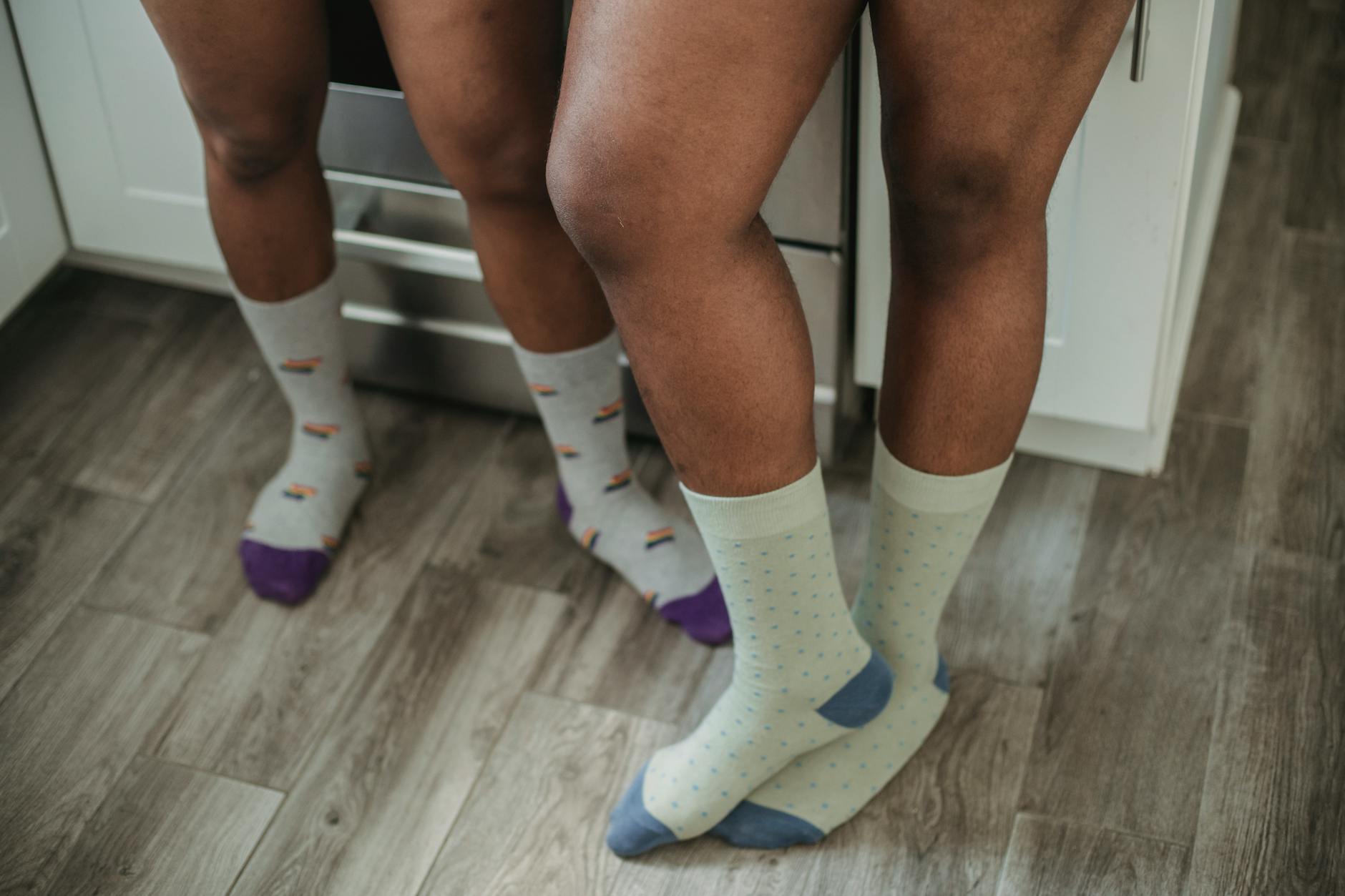
The role of socks in blister prevention is often underestimated, yet the right socks can reduce blister formation by over 50 percent. Moisture-wicking synthetic socks (merino wool, polypropylene, or polyester blends) move sweat away from your skin surface, keeping it drier than cotton socks, which absorb moisture and hold it against your skin. The key distinction: moisture-wicking socks don’t prevent sweating—they prevent sweat from pooling against your foot. Sock thickness and seam placement also influence blister risk.
Thicker socks provide more cushioning and create more friction against shoe material, which can paradoxically reduce sliding between foot and sock. However, thick socks can also make your shoe fit too tightly, creating different friction points. Ultra-thin seamless socks work better for some runners, while others need the extra cushioning that thicker merino socks provide. A specific example: a runner switching from regular cotton athletic socks to merino wool socks often notices blister improvement within 2-3 runs, even without changing shoes or other variables.
Applying Preventive Products and Techniques
Before blisters form, applying friction-reducing products to blister-prone areas provides an additional protective layer. Products like Bodyglide, Squirrel’s Nut Butter, or Kinesiology tape create a barrier between skin and shoe. Apply these to your heels, between toes, and any other area where you’ve previously experienced blisters. The application matters—you need enough coverage to last the duration of your run, but excessive application can make socks slip or create a sticky mess.
Taping and blister prevention wraps offer different advantages and tradeoffs. Kinesiology tape is elastic and comfortable for runs under two hours, but less durable for longer efforts. Athletic tape is more rigid and longer-lasting but can restrict movement and cause blistering in different spots if applied incorrectly. Some runners use a hybrid approach: pre-taping vulnerable areas, then adding additional coverage mid-run if needed. This adds complexity but significantly reduces blister occurrence on runs longer than a half marathon, particularly in humid conditions.
Addressing Sweat Management During Runs
Sweat management extends beyond sock selection to include body-wide hydration and cooling strategies. Overheating amplifies blister risk because increased sweat production and higher skin temperatures accelerate the friction process. During runs longer than 90 minutes, taking brief walking breaks in shaded areas can allow your feet to cool slightly and reduce overall sweat accumulation.
This sounds minor, but research shows that a 5-minute cool-down break reduces blister risk by approximately 15-20 percent on longer runs. One critical limitation: some runners with excessive sweat production won’t solve the problem through product selection alone. Heavy sweaters may need to consider environmental factors—running during cooler parts of the day, choosing shadier routes, or adjusting their pace to maintain lower core temperatures. Additionally, runners with hyperhidrosis (abnormally high sweat production) may need to experiment with antiperspirant products on their feet, though this requires careful testing to ensure the product doesn’t cause irritation or create different friction patterns.
Breaking In New Shoes Properly
New running shoes require a break-in period, during which blister risk actually increases temporarily. The shoe materials haven’t yet adapted to your foot shape, and new synthetic materials haven’t been softened by wear. Rather than jumping into a long run with new shoes, most experts recommend a gradual transition: wear new shoes for shorter runs while maintaining your usual shoes for longer distances, then progressively shift toward the new shoes over 2-3 weeks.
A practical example: a runner receiving new shoes a week before a goal race often regrets it when blisters develop during the race. Conversely, breaking in new shoes 4-6 weeks before an important run gives time to identify and resolve any friction issues before they matter. Some running stores offer a trial period allowing you to test shoes for 30 days, which provides real-world feedback before committing to a full pair.
Long-Term Blister Prevention Strategy
Developing a systematic approach to blister prevention requires tracking what works for your individual foot. Keep a simple log of which shoes, socks, and preventive products you used on each run, noting any blister development or discomfort. Patterns emerge quickly—you might discover that you develop blisters specifically on downhill runs, or only when running in humidity above 70 percent, or only in your older shoes.
This data lets you adjust your strategy predictively rather than reactively. Looking forward, ongoing innovations in shoe design and moisture-wicking materials continue improving blister prevention options. Newer running shoe designs incorporate seamless construction in high-friction areas, and advanced sock technologies now offer targeted cushioning in blister-prone zones. The trend is toward customization and specificity, moving away from one-size-fits-all solutions toward individualized prevention based on your unique biomechanics and sweat profile.
Conclusion
Blister prevention requires a multi-factor approach combining proper shoe fit, moisture-wicking socks, appropriate friction-reduction products, and attention to overall heat and sweat management. No single solution eliminates blisters for every runner, but implementing even three of these strategies simultaneously produces dramatic improvements for most people. The effort is worthwhile because blisters don’t just cause discomfort—they can derail training, force extended recovery periods, and undermine your confidence heading into races.
Start by addressing the factor most likely affecting you: if your shoes don’t fit correctly, fix that first before trying expensive preventive products. If you’re wearing cotton socks, switch to merino wool and evaluate the result after three runs. Build your blister-prevention system incrementally, adjusting based on what you actually experience rather than what you expect to happen. Most runners find that 4-6 weeks of systematic experimentation identifies the combination that works for their feet, leading to thousands of blister-free miles.
Frequently Asked Questions
Can I prevent blisters on a long run I’m doing tomorrow if I haven’t prepared?
Partially. Applying friction-reducing balm to vulnerable areas, wearing moisture-wicking socks, and running at a reduced pace all help. However, tomorrow’s preparedness is limited. Your best strategy is aggressive prevention during this run to inform better preparation for future ones.
Do expensive running shoes prevent blisters better than cheaper ones?
Price doesn’t determine blister prevention—fit does. A $80 shoe that fits perfectly prevents more blisters than a $200 shoe that’s half a size too large. Test shoes at a specialty running store regardless of price point.
Should I pop a blister or let it heal on its own?
Leave intact blisters alone if possible; the fluid protects healing skin underneath. If a blister is about to rupture from pressure, sterilize a needle, drain it, apply antibiotic ointment, and cover it with a blister bandage. This prevents infection while allowing healing.
How many miles can I run before blisters become likely?
This varies dramatically by individual. Most runners encounter blisters between 10-20 miles if prevention strategies aren’t in place, but some develop them at 5 miles while others run 30+ with no issues. Individual factors matter far more than distance.
Can I prevent blisters by running barefoot or in minimalist shoes?
Barefoot running changes friction patterns but doesn’t eliminate blister risk. Transition gradually to minimalist shoes over several weeks, as sudden changes typically increase blisters before adaptation occurs.
What should I do if blisters keep forming despite following all these strategies?
You likely have a specific biomechanical issue—possibly overpronation, unusual gait mechanics, or extremely high sweat production. Consider a gait analysis at a specialty running store or consultation with a sports podiatrist.