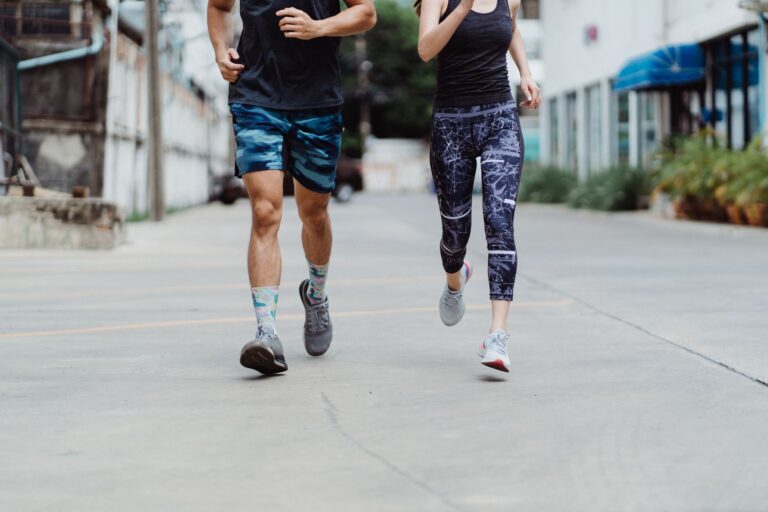
Most treadmill runners perform best with a heel drop between 8mm and 10mm, which provides enough cushioning for repetitive indoor running while maintaining a natural foot strike pattern suited to the flat, consistent surface of a treadmill belt. This moderate drop range accommodates the slight forward lean many runners naturally adopt on treadmills and reduces strain on the Achilles tendon during longer sessions. A runner logging 30 to 40 miles per week on a treadmill, for instance, typically finds that a 10mm drop shoe prevents the calf fatigue that accumulates with lower-drop options while avoiding the exaggerated heel striking that higher drops can encourage.
The choice becomes more nuanced based on your running speed, injury history, and how your body has adapted over time. Someone transitioning from outdoor road running may need a different drop on the treadmill than they use outside, since the motorized belt changes ground contact dynamics. Meanwhile, runners with a history of plantar fasciitis or Achilles tendinopathy often need to prioritize drop height over other shoe features when selecting treadmill footwear. This article examines how heel drop affects treadmill running mechanics, explores the relationship between drop height and common injuries, and provides practical guidance for selecting and transitioning between different heel drops based on your specific running patterns and goals.
Table of Contents
- What Heel Drop Works Best for Treadmill Running?
- How Treadmill Belt Mechanics Influence Heel Drop Selection
- The Relationship Between Heel Drop and Treadmill Running Injuries
- Transitioning to a Different Heel Drop for Treadmill Training
- Why Some Treadmill Runners Should Avoid Low-Drop Shoes
- Heel Drop Considerations for Incline Treadmill Training
- How to Prepare
- How to Apply This
- Expert Tips
- Conclusion
- Frequently Asked Questions
What Heel Drop Works Best for Treadmill Running?
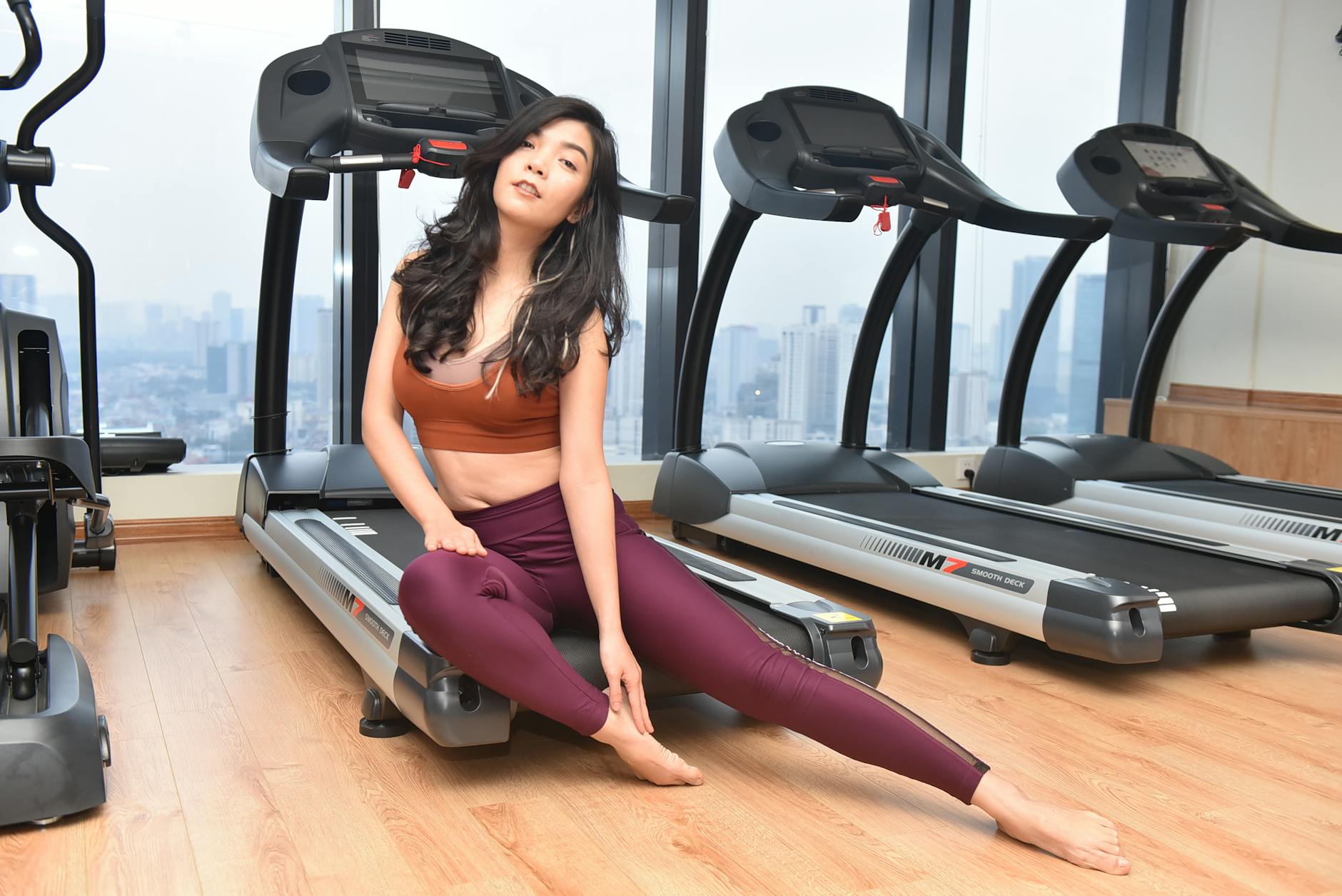
Heel drop, measured as the difference in millimeter height between the heel and forefoot of a running shoe, fundamentally changes how force distributes through your foot and lower leg during each stride. On a treadmill, where the belt moves beneath you rather than you propelling yourself over stationary ground, this measurement takes on particular importance. The consistent, perfectly flat surface eliminates the terrain variability that outdoor runners encounter, meaning any biomechanical tendency gets repeated identically thousands of times per session. Research from biomechanics labs has shown that treadmill runners tend to land with slightly less knee flexion than road runners at the same pace, which shifts more impact stress toward the heel.
A runner wearing a 4mm drop shoe outdoors might find the same shoe uncomfortable after 20 minutes on a treadmill because the surface consistency amplifies the calf and Achilles loading that lower drops create. Conversely, a 12mm drop that feels stable outside can promote overstriding on a treadmill, where runners sometimes subconsciously reach forward to match the belt speed. The 8mm to 10mm range works for most treadmill runners because it positions the foot in a moderately plantarflexed angle at landing, reducing both the extreme heel strike of high-drop shoes and the forefoot loading of minimal drops. However, this recommendation assumes you’re running at moderate paces for general fitness. Sprinters doing interval work and ultramarathon trainers logging slow miles have different optimal ranges.

How Treadmill Belt Mechanics Influence Heel Drop Selection
The motorized belt of a treadmill creates a unique running environment that interacts with heel drop differently than any outdoor surface. When your foot lands on a treadmill, the belt is already moving backward at your set pace, which means ground contact time and loading patterns differ from overground running. Studies using force plates embedded in treadmill decks have measured 5 to 8 percent less vertical impact force compared to road running at equivalent speeds, suggesting the moving belt partially absorbs landing shock. This reduced impact might seem like an argument for lower-drop shoes on treadmills, but the relationship isn’t that simple. The belt’s movement also pulls your foot backward during stance phase, increasing strain on the calf muscles and Achilles tendon.
A lower heel drop already loads these structures more heavily, so combining minimal shoes with treadmill running effectively doubles the stress on your posterior chain. Runners who’ve successfully transitioned to 4mm or zero-drop shoes outdoors sometimes develop Achilles problems when they bring those same shoes to heavy treadmill training blocks. However, if you’re a forefoot striker who runs most of your treadmill miles at faster paces, the dynamic changes. Speed work on a treadmill often benefits from a lower drop because faster running naturally shifts your landing point forward on the foot. A 6mm drop shoe might cause calf fatigue during a 45-minute easy run but feel ideal for 400-meter repeats on the same machine. This is why serious treadmill runners often keep two different drop heights in their rotation.
The Relationship Between Heel Drop and Treadmill Running Injuries
Injury patterns among treadmill runners correlate strongly with heel drop selection, though the direction of that correlation depends on which injury you‘re trying to prevent. Higher drops of 10mm to 12mm shift stress away from the Achilles tendon and calf muscles toward the knee and hip, while lower drops do the reverse. On a treadmill, where you might run the same pace for 30 to 60 minutes without the variation that outdoor terrain provides, these stress concentrations become more problematic. Runners with a history of Achilles tendinopathy or calf strains generally fare better with moderate to high drops during treadmill sessions. The repetitive nature of treadmill running means that even a small increase in Achilles loading per stride compounds over thousands of steps.
A physical therapist working with a recreational runner averaging 25 miles per week on a treadmill, for example, might recommend staying above 8mm drop until the tendon has fully healed and been progressively strengthened. Knee pain presents the opposite consideration. Patellofemoral syndrome and IT band issues correlate with higher-drop shoes that encourage heel striking and overstriding. If you’ve dealt with runner’s knee, you might find that dropping to a 6mm or 8mm shoe reduces symptoms, but only if you simultaneously address any cadence issues. Simply switching to a lower drop without increasing step rate often just trades one injury for another, particularly on treadmills where the fixed pace makes it easy to fall into an inefficient, overstriding pattern.
Transitioning to a Different Heel Drop for Treadmill Training
Changing heel drop requires a deliberate transition period, and treadmill runners often need longer adaptation times than their outdoor counterparts because of the repetitive stress patterns involved. A general guideline suggests reducing drop by no more than 4mm at a time and allowing two to four weeks of adaptation before further changes. During this period, limiting treadmill volume to 50 percent of your normal mileage in the new shoes helps prevent overuse injuries. Consider a runner moving from a 12mm drop stability shoe to an 8mm neutral trainer for treadmill work. The first week might involve just two easy treadmill runs of 20 minutes each in the new shoes, with remaining treadmill sessions in the old shoes.
By week three, the new shoes can handle longer sessions, but speed work should still happen in the higher-drop option until the calf and Achilles have adapted. Rushing this process is the most common mistake in drop transitions, and the treadmill’s unforgiving consistency makes it an especially poor environment for forced adaptation. The tradeoff with a conservative transition is time. A full move from 12mm to 4mm might take three to four months using this approach, which frustrates runners who’ve read about the benefits of lower-drop shoes and want those benefits immediately. But the alternative, pushing through warning signs of Achilles strain or calf tightness, frequently results in injuries that sideline runners for longer than a proper transition would have taken. The treadmill amplifies both the benefits and risks of heel drop changes, making patience essential.
Why Some Treadmill Runners Should Avoid Low-Drop Shoes
The minimalist running movement popularized zero-drop and low-drop shoes over the past decade, but these options present specific risks for certain treadmill runners that warrant careful consideration. Runners over age 45 with reduced Achilles tendon elasticity face significantly higher injury rates when combining low drops with high treadmill volume. The tendon’s ability to store and return elastic energy diminishes with age, making the increased loading from low-drop shoes more likely to exceed tissue tolerance. Body weight also factors into this equation more than many runners realize. A 200-pound runner generates substantially more force per stride than a 140-pound runner, and the lower the heel drop, the more that force channels through the calf and Achilles. On a treadmill, where you might take 10,000 steps during an hour-long run, this compounded loading can overwhelm tissues that handle the same shoes fine for shorter outdoor runs.
Heavier runners often do better staying above 8mm drop for treadmill work, regardless of what drop they prefer outside. Runners with limited ankle dorsiflexion should also approach low-drop treadmill shoes cautiously. If you can’t pass a basic knee-to-wall ankle mobility test, moving to a 4mm or zero-drop shoe forces your calf muscles to compensate for the mobility restriction. This compensation becomes especially problematic on treadmills because you can’t vary your foot strike in response to terrain changes. The limitation isn’t permanent. Targeted mobility work can improve dorsiflexion over months. But until that mobility exists, a moderate drop provides a safer treadmill running experience.
Heel Drop Considerations for Incline Treadmill Training
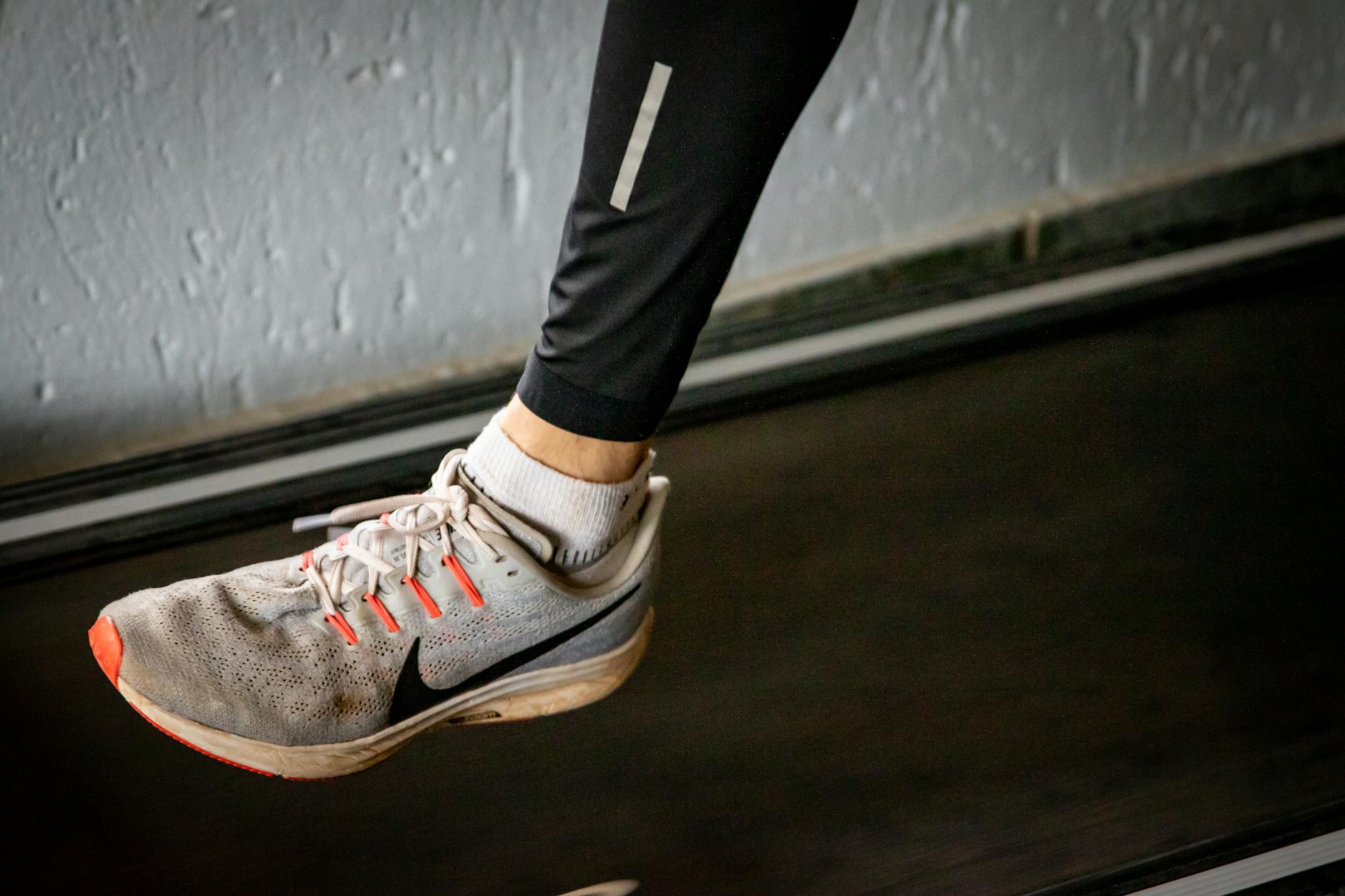
Incline treadmill running shifts the optimal heel drop range downward compared to flat running, creating a scenario where the same runner might benefit from different shoes depending on the planned workout. Walking or running on an incline naturally moves your center of mass forward and increases ankle dorsiflexion, partially mimicking the biomechanical effects of a lower-drop shoe. A runner who prefers 10mm drop for flat treadmill work might find that an 8mm or even 6mm shoe feels more natural during sustained incline sessions.
The practical example here involves trail runners using incline treadmills to simulate mountain terrain during winter months. Many trail shoes already feature lower drops of 4mm to 6mm because descending steep terrain loads the forefoot heavily. Using these same shoes for incline treadmill work often proves effective, even if they’d cause problems during flat treadmill running. The incline essentially provides the biomechanical accommodation that the lower drop requires, making the combination work despite the apparent contradiction with flat-treadmill recommendations.
How to Prepare
- **Assess your current shoes and any associated discomfort.** Check the heel drop of every running shoe you currently own and note which ones feel best on the treadmill specifically. If you experience calf tightness in certain pairs, check whether those are your lower-drop options.
- **Evaluate your Achilles and calf health honestly.** Any history of Achilles tendinopathy, calf strains, or persistent tightness in these areas suggests starting with a moderate to higher drop of 8mm to 10mm and being cautious about going lower.
- **Consider your typical treadmill workout structure.** If you primarily do easy runs and long sessions on the treadmill, you’ll likely want a different drop than someone who uses the treadmill mainly for intervals and speed work. List your three most common treadmill workouts.
- **Test your ankle mobility.** Perform a knee-to-wall test where you see how far your foot can be from a wall while still touching your knee to the wall. Less than four inches suggests limited dorsiflexion that may make low-drop shoes problematic.
- **Calculate your weekly treadmill volume and intensity.** Higher volume makes drop selection more critical because any suboptimal choice compounds over more steps. A common mistake is applying outdoor shoe preferences to heavy treadmill training blocks without considering how the surfaces differ in stress distribution.
How to Apply This
- **Start with one pair at your target drop for shorter treadmill sessions only.** Keep your current shoes for longer runs and workouts while your body adapts, limiting the new drop to easy runs of 30 minutes or less for the first two weeks.
- **Monitor specific indicators during and after each treadmill run.** Track calf and Achilles soreness, any changes in knee comfort, and whether your cadence naturally shifts in the new shoes. Increasing calf tightness that doesn’t resolve within 48 hours signals too rapid a transition.
- **Gradually increase the percentage of treadmill miles in the new drop.** Move from 30 percent of weekly treadmill volume to 50 percent over two to three weeks, then to 75 percent over another two weeks. Only after a full month should you consider using the new drop for all treadmill running.
- **Reassess after six weeks of full integration.** Some drop-related issues don’t appear immediately but develop as cumulative strain. If problems emerge at this stage, consider whether the drop itself is wrong for your mechanics or whether the transition simply needs more time.
Expert Tips
- Match your heel drop to your primary treadmill workout type. Easy and long runs favor 8mm to 10mm drops, while speed work often suits 6mm to 8mm.
- Don’t assume your outdoor shoe preferences translate directly to treadmill running. The belt mechanics change loading patterns enough that many runners benefit from a 2mm higher drop on the treadmill than they use outside.
- Avoid switching heel drops during a training block for a goal race. Major biomechanical changes belong in base building phases, not the weeks leading up to competition.
- Pay attention to your natural cadence in different drops. If a lower drop causes your step rate to decrease, you’re likely overstriding to compensate, which negates any potential benefits.
- Don’t combine a drop change with a new shoe brand or model simultaneously. Isolating variables helps you identify what’s working and what isn’t when problems or improvements arise.
Conclusion
Heel drop selection for treadmill running requires balancing the unique demands of the motorized belt surface with your individual biomechanics, injury history, and training goals. Most runners find that the 8mm to 10mm range provides the best combination of cushioning and natural foot positioning for steady-state treadmill work, while faster intervals may benefit from slightly lower drops. The key is recognizing that treadmill running isn’t simply outdoor running moved inside.
The surface consistency and belt mechanics create distinct stresses that make drop selection more consequential per mile than on variable outdoor terrain. Moving forward, approach any heel drop change as a multi-week project rather than an immediate switch. Let your body provide feedback through soreness patterns and performance feel, and don’t hesitate to adjust course if a particular drop isn’t serving your treadmill running well. The right heel drop should feel unremarkable after adaptation, allowing you to focus on the workout rather than your footwear.
Frequently Asked Questions
How long does it typically take to see results?
Results vary depending on individual circumstances, but most people begin to see meaningful progress within 4-8 weeks of consistent effort. Patience and persistence are key factors in achieving lasting outcomes.
Is this approach suitable for beginners?
Yes, this approach works well for beginners when implemented gradually. Starting with the fundamentals and building up over time leads to better long-term results than trying to do everything at once.
What are the most common mistakes to avoid?
The most common mistakes include rushing the process, skipping foundational steps, and failing to track progress. Taking a methodical approach and learning from both successes and setbacks leads to better outcomes.
How can I measure my progress effectively?
Set specific, measurable goals at the outset and track relevant metrics regularly. Keep a journal or log to document your journey, and periodically review your progress against your initial objectives.
When should I seek professional help?
Consider consulting a professional if you encounter persistent challenges, need specialized expertise, or want to accelerate your progress. Professional guidance can provide valuable insights and help you avoid costly mistakes.
What resources do you recommend for further learning?
Look for reputable sources in the field, including industry publications, expert blogs, and educational courses. Joining communities of practitioners can also provide valuable peer support and knowledge sharing.