
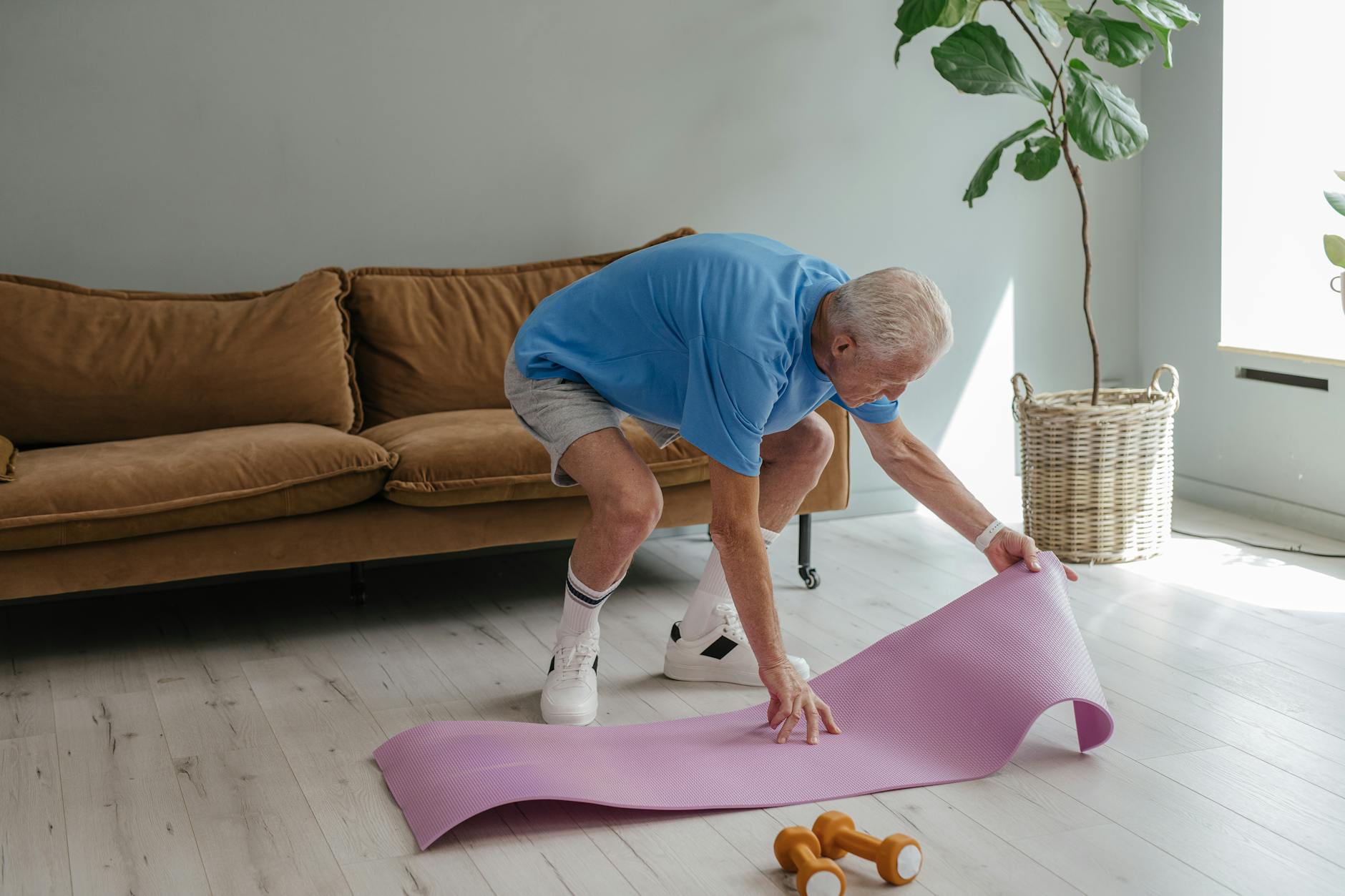
The most effective cardio exercises for older adults with back pain are low-impact activities that maintain spinal neutrality while elevating heart rate””specifically walking, water aerobics, recumbent cycling, and elliptical training. These exercises allow cardiovascular conditioning without the jarring impacts or spinal loading that aggravate most back conditions. A 68-year-old with degenerative disc disease, for instance, might find that 20 minutes on a recumbent bike three times weekly provides meaningful aerobic benefit while actually reducing stiffness compared to sedentary rest. The key principle is that movement itself often helps back pain rather than worsening it, provided the movement is appropriate.
Prolonged inactivity tends to weaken the muscles that support the spine and can increase pain sensitivity over time. However, not all cardio is created equal””high-impact activities like running or jumping can compress spinal structures, while exercises requiring excessive bending or twisting may strain already vulnerable tissues. This article covers which specific exercises work best, how to modify common activities for back safety, warning signs that indicate you should stop, and how to progress your cardio program without triggering flare-ups. The goal is sustainable cardiovascular fitness that works with your back condition rather than against it. This requires understanding both your specific type of back pain and which movements either load or unload the affected structures.
Table of Contents
- What Are the Safest Cardio Exercises for Older Adults With Back Pain?
- Low-Impact Cardio Options That Protect the Spine
- How Back Pain Type Affects Exercise Selection
- Building a Back-Safe Cardio Routine Step by Step
- Warning Signs to Stop Exercise and Common Mistakes
- Modifying Traditional Cardio Activities for Back Safety
- Maintaining Progress Without Triggering Setbacks
- Conclusion
What Are the Safest Cardio Exercises for Older Adults With Back Pain?
Water-based exercise stands out as arguably the safest cardiovascular option for older adults dealing with back pain. The buoyancy of water reduces spinal compression by supporting body weight””typically eliminating 50 to 90 percent of weight-bearing stress depending on immersion depth. Pool walking, water aerobics classes, and swimming with proper technique allow heart rate elevation while the spine experiences minimal gravitational loading. For someone with spinal stenosis who experiences pain when standing upright for extended periods, water exercise can provide the only comfortable cardio option available. Recumbent cycling offers another spine-friendly choice because the reclined position supports the lower back against a padded seat while eliminating the forward-flexed posture of upright bikes. This matters particularly for those with disc-related pain, where forward bending often increases symptoms.
The seated position also removes balance concerns that might cause older adults to tense their back muscles protectively. Compared to a standard upright stationary bike, the recumbent version typically allows longer exercise sessions with less post-workout stiffness. Walking remains the most accessible cardio option and works well for many types of back pain, though technique and duration matter significantly. Short, frequent walks of 10 to 15 minutes often prove more tolerable than single longer sessions. using trekking poles can reduce spinal load by transferring some body weight through the arms. However, walking on hard surfaces like concrete tends to transmit more impact through the spine than softer surfaces like packed dirt trails or rubberized tracks. Those with facet joint arthritis may find that walking tolerance varies considerably day to day.

Low-Impact Cardio Options That Protect the Spine
Elliptical trainers provide a middle ground between walking and cycling, offering weight-bearing exercise without the impact forces of each footstrike hitting the ground. The gliding motion keeps the feet in continuous contact with the pedals, eliminating the repetitive jarring that accumulates over a 30-minute walk. Many older adults find they can exercise longer on an elliptical than they can walk before back symptoms appear. The arm handles also allow some upper body involvement, distributing the workload beyond just the legs. Seated rowing machines, when used with proper form, can provide excellent cardiovascular conditioning while actually strengthening back muscles. The critical limitation here is that improper technique””specifically rounding the lower back during the forward reach””can worsen disc-related pain significantly.
Those with flexion-intolerant back conditions should either avoid rowing entirely or work with a physical therapist to establish safe movement patterns. For extension-intolerant conditions like spinal stenosis, rowing may actually feel quite comfortable because the slight forward lean can open up the spinal canal. Arm ergometers, sometimes called upper body bikes, offer cardio benefits without any lower body or spinal involvement. These devices work well for those whose back pain severely limits leg-based exercise, though the cardiovascular demand of arm-only exercise reaches a ceiling lower than full-body alternatives. They’re often found in physical therapy clinics and some commercial gyms. The tradeoff is that while they protect the spine completely, they don’t provide the weight-bearing stimulus that helps maintain bone density in the hips and spine.
How Back Pain Type Affects Exercise Selection
Not all back pain responds identically to exercise, and understanding your specific condition shapes which cardio activities suit you best. Disc-related pain, including herniations and bulges, typically worsens with forward bending and prolonged sitting but often improves with extension-based movements and walking. Spinal stenosis presents the opposite pattern””standing and walking often increase leg symptoms while sitting and forward bending provide relief. This distinction matters enormously for exercise selection. Someone with lumbar stenosis might tolerate a standard upright stationary bike better than walking because the slight forward lean opens the spinal canal and reduces nerve compression. That same person might struggle with the recumbent bike’s reclined position, which places the spine in relative extension.
Conversely, a person with disc problems might find the recumbent bike comfortable while the upright position aggravates symptoms. These individual variations explain why blanket exercise recommendations often fail. Degenerative changes and osteoarthritis of the spine, common in older adults, generally respond well to gentle, consistent movement of almost any type. The “use it or lose it” principle applies strongly here””regular movement helps maintain joint mobility and muscle strength that supports compromised spinal structures. However, if arthritis has produced bone spurs or significant joint narrowing, certain positions may still provoke symptoms. Starting with shorter sessions and gradually extending duration allows you to identify your tolerance threshold before crossing it.

Building a Back-Safe Cardio Routine Step by Step
Beginning a cardio program with back pain requires more conservative progression than standard fitness recommendations suggest. Rather than the commonly cited guideline of 150 minutes of moderate cardio weekly, starting with three 10-minute sessions in the first week makes sense for most older adults with significant back symptoms. This initial phase serves as a testing period to identify how your back responds to each type of activity before committing to longer durations. The progression pattern that tends to work best involves increasing duration before increasing intensity. Adding five minutes to each session every one to two weeks, while keeping the same moderate pace, allows the supporting muscles and connective tissues to adapt gradually.
Jumping straight to higher intensities””even if cardiovascular fitness allows it””often triggers back flare-ups because the stabilizing muscles fatigue before the heart and lungs do. A practical example: someone might spend four to six weeks building from 10-minute to 30-minute recumbent bike sessions at the same resistance level before considering any intensity increase. The comparison between daily short sessions versus fewer longer sessions often favors frequency over duration for back pain management. Three 10-minute walks daily may produce better outcomes than one 30-minute walk, both for cardiovascular health and back comfort. The shorter sessions prevent the cumulative fatigue that causes form breakdown and postural compensation. This distributed approach also maintains more consistent blood flow to spinal tissues throughout the day rather than concentrating movement into a single window.
Warning Signs to Stop Exercise and Common Mistakes
Sharp, sudden pain during exercise signals an immediate need to stop””this differs from the dull ache or stiffness that often accompanies back conditions and may actually improve with continued gentle movement. Pain that radiates into the leg, particularly below the knee, suggests nerve involvement and warrants both stopping the activity and consulting a healthcare provider. Similarly, any numbness, tingling, or weakness in the legs during cardio indicates potential nerve compression that exercise may be worsening. A common mistake among motivated older adults is pushing through increasing pain with the assumption that exercise should hurt. While mild discomfort during the first few minutes of activity often fades as tissues warm up, pain that intensifies as exercise continues is a warning sign, not a challenge to overcome. The “no pain, no gain” mentality causes many back flare-ups that set progress back weeks.
Another frequent error involves adding exercise variety too quickly””trying water aerobics, elliptical training, and cycling all in the same week makes it impossible to identify which activity helps or hurts. Post-exercise soreness patterns provide important feedback. Muscle fatigue in the legs and general tiredness following cardio is expected. Back stiffness that resolves within an hour or two typically indicates acceptable loading. However, increased back pain lasting more than 24 hours after exercise suggests that session exceeded your current tolerance. This delayed response makes it particularly important to change only one variable at a time””duration, intensity, or activity type””so you can accurately attribute any symptom changes.

Modifying Traditional Cardio Activities for Back Safety
Swimming requires technique modification to remain back-friendly for older adults. The freestyle stroke, with its rotational movement and potential for excessive lumbar extension, often bothers those with facet joint problems. Backstroke typically provides the most spine-neutral option, though it requires sufficient shoulder mobility and an uncrowded lane for safety. Using a pool noodle or flotation belt to walk or jog in deep water eliminates stroke technique concerns entirely while still providing excellent cardiovascular challenge.
Group fitness classes marketed as “low-impact” still vary considerably in their appropriateness for back pain. A class incorporating significant forward bending, twisting, or rapid direction changes may technically qualify as low-impact for joint purposes while still stressing the spine. Speaking with the instructor beforehand about modifications, or observing a class before joining, helps identify whether the specific movements suit your condition. Many instructors can suggest alternative movements for participants with back limitations.
Maintaining Progress Without Triggering Setbacks
Long-term success with cardio exercise and back pain depends on accepting that progress will not follow a linear path. Flare-ups will occur despite best efforts, and responding appropriately determines whether they become minor interruptions or major setbacks. Reducing but not eliminating exercise during symptomatic periods generally produces better outcomes than complete rest. Someone experiencing a mild flare-up might temporarily shorten sessions, reduce intensity, or switch to a more supportive activity like pool walking rather than stopping entirely.
The psychological component of exercising with chronic pain deserves acknowledgment. Fear of movement, sometimes called kinesiophobia, commonly develops after painful episodes and can persist even when structures have healed sufficiently to tolerate activity. This fear often leads to excessive caution that perpetuates deconditioning and weakness. Working with a physical therapist or exercise physiologist experienced in chronic pain can help establish appropriate boundaries””neither avoiding beneficial movement nor pushing into genuinely harmful territory.
Conclusion
Cardiovascular exercise remains both possible and beneficial for older adults with back pain when activities are chosen thoughtfully and progressed gradually. Water-based exercise, recumbent cycling, elliptical training, and properly paced walking offer the strongest combination of cardiovascular benefit and spinal protection. Understanding whether your specific back condition favors flexion or extension helps narrow down which options will work best for you individually.
Starting conservatively with short sessions, prioritizing frequency over duration, and changing only one variable at a time allows you to build a sustainable cardio routine without triggering setbacks. Monitoring for warning signs, accepting that progress includes occasional flare-ups, and adjusting rather than abandoning exercise during symptomatic periods supports long-term cardiovascular health alongside back pain management. Consultation with healthcare providers familiar with your specific condition can further personalize these general principles.
1 thought on “Cardio Exercises for Older Adults With Back Pain”
Comments are closed.