
Walking, swimming, cycling, and dance-based cardio exercises are among the most effective cardiovascular activities for reducing fall risk, primarily because they train the neuromuscular systems responsible for balance and coordination while simultaneously building the aerobic capacity needed for sustained physical independence. A 2019 study published in the British Journal of Sports Medicine found that older adults who engaged in regular moderate-intensity cardio showed a 23 percent reduction in fall rates compared to sedentary peers, with the greatest benefits coming from activities that challenged dynamic balance””the ability to maintain stability while moving. Consider the difference between someone who walks regularly on varied terrain versus someone who relies exclusively on a treadmill: the outdoor walker constantly adjusts to uneven surfaces, subtle inclines, and obstacles, training their proprioceptive system and reactive balance in ways that directly translate to fall prevention.
This doesn’t mean treadmill walking is useless, but it illustrates why the type of cardio matters as much as the fact of doing cardio at all. The cardiovascular benefits””improved circulation, better oxygen delivery to muscles and brain, reduced fatigue””provide the foundation, but the fall-prevention magic happens when cardio also demands balance, coordination, and quick postural adjustments. This article examines the specific cardio exercises that research has shown to reduce fall risk, explains why they work at a physiological level, and provides practical guidance for incorporating them into a fitness routine. We’ll also cover common mistakes that can undermine these benefits and discuss when certain exercises may not be appropriate for specific populations.
Table of Contents
- Why Do Cardio Exercises Help Prevent Falls?
- The Best Low-Impact Cardio Options for Balance and Stability
- How Walking Terrain Affects Fall Prevention Benefits
- Dance-Based Cardio and Its Unique Fall Prevention Benefits
- Common Mistakes That Reduce Fall Prevention Benefits
- Interval Training for Enhanced Reactive Balance
- Adapting Cardio for Different Fitness Levels and Health Conditions
- Conclusion
Why Do Cardio Exercises Help Prevent Falls?
The connection between cardiovascular fitness and fall prevention operates through multiple physiological pathways. First, regular cardio exercise improves blood flow to the brain, enhancing cognitive processing speed and reaction time””both critical factors when you stumble and need to recover quickly. Research from the University of Illinois demonstrated that older adults with higher aerobic fitness showed faster neural processing in brain regions associated with executive function and motor control. Second, sustained cardiovascular activity builds endurance in the postural muscles that keep you upright, particularly the deep stabilizers of the core and lower legs that fatigue more quickly in deconditioned individuals. However, the relationship isn’t linear. Someone who runs exclusively on flat, predictable surfaces may develop excellent aerobic capacity but won’t necessarily improve their reactive balance””the rapid, unconscious adjustments that prevent a stumble from becoming a fall.
This explains why some highly fit endurance athletes still experience falls when they encounter unexpected terrain changes or obstacles. The most effective fall-prevention cardio combines cardiovascular challenge with balance demands, forcing the nervous system to coordinate movement while maintaining stability. A useful comparison is between pool running and overground running. Pool running provides excellent cardiovascular training with minimal impact, making it attractive for those with joint concerns. But the buoyancy of water eliminates the balance challenge entirely, meaning pool running alone won’t train the systems most relevant to fall prevention. Adding land-based activities or specific balance work becomes necessary to address this gap.
The Best Low-Impact Cardio Options for Balance and Stability
Swimming and water aerobics offer a paradox for fall prevention: they provide exceptional cardiovascular benefits with virtually no fall risk during the activity itself, but they don’t train balance in weight-bearing positions. That said, aquatic exercise builds the muscular endurance and joint mobility that support balance on land. The key is treating water exercise as a complement to, not a replacement for, land-based activity. Someone recovering from an injury might start with pool work to build conditioning, then gradually transition to land-based cardio as they heal. Cycling, whether stationary or outdoors, strengthens the quadriceps, hamstrings, and hip stabilizers that are essential for recovering from a stumble.
Outdoor cycling adds balance and coordination demands that stationary cycling lacks, though both improve the cardiovascular endurance that prevents fatigue-related falls later in the day. A limitation worth noting: cycling doesn’t load the bones in the same way walking or running does, so for individuals concerned about osteoporosis-related fractures from falls, cycling should be paired with weight-bearing activities. elliptical training occupies a middle ground, providing continuous motion that’s easier on joints than running while still requiring weight-bearing stance. Most elliptical machines allow hands-free operation, which increases the balance challenge. However, the fixed movement path means less proprioceptive training than activities performed on natural surfaces. For someone transitioning from sedentary to active, the elliptical offers a reasonable starting point before progressing to less constrained movements.
How Walking Terrain Affects Fall Prevention Benefits
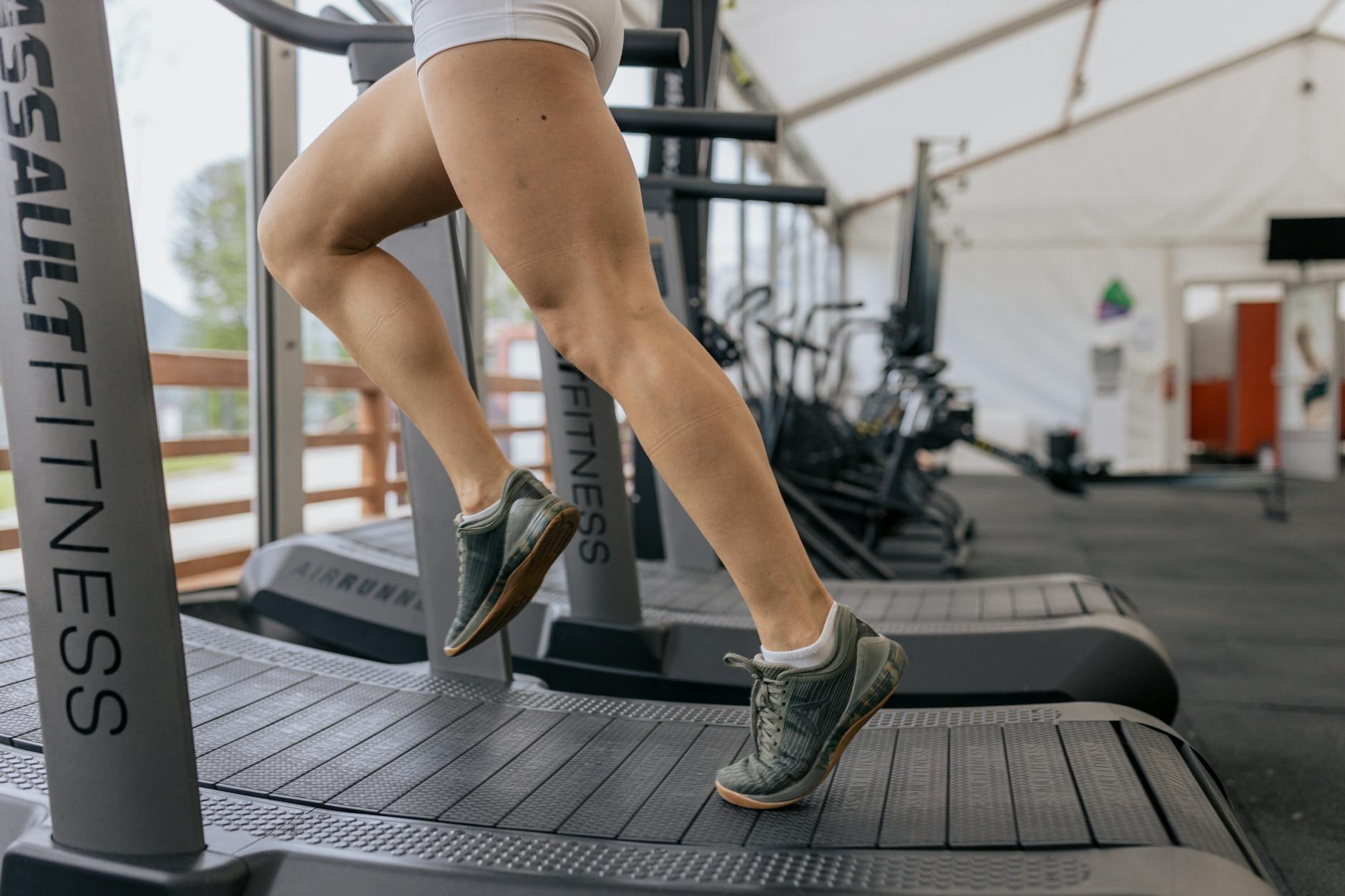
The surface you walk on dramatically influences the fall-prevention benefits you receive. Walking on uneven trails, grass, sand, or cobblestones forces constant small adjustments in foot placement and ankle stability, training the proprioceptors in your feet and ankles to detect and respond to surface changes. A study comparing older adults who walked primarily on paved surfaces versus varied terrain found that the varied-terrain group showed significantly better performance on clinical balance tests after six months. This makes intuitive sense: you can’t improve at something you never practice. Treadmill walking, while convenient and controlled, provides minimal balance challenge because the surface is perfectly flat, predictable, and moving beneath you.
This doesn’t mean treadmills have no value””they’re excellent for maintaining cardiovascular fitness during bad weather or for individuals just beginning to exercise. But relying exclusively on treadmill walking means missing the proprioceptive training that comes from outdoor surfaces. One practical solution is treating treadmill sessions as supplements to outdoor walking rather than replacements. For those with significant balance impairments, starting on predictable surfaces and gradually introducing variability makes sense. Someone recovering from a stroke, for example, might begin with flat, indoor walking and progress to outdoor sidewalks, then grass, then trails as their confidence and capacity improve. The progression should match the individual’s current abilities””walking on challenging terrain before you’re ready can cause the very falls you’re trying to prevent.

Dance-Based Cardio and Its Unique Fall Prevention Benefits
Dance-based cardio exercises like Zumba, line dancing, and ballroom dancing combine cardiovascular training with multidirectional movement, rhythmic timing, and partner or group coordination””all elements that challenge balance in ways standard cardio doesn’t. Research from McGill University found that older adults who participated in social dance programs showed greater improvements in gait speed and balance confidence compared to those doing traditional exercise programs of equivalent intensity. The cognitive demands of remembering steps and responding to music appear to provide additional protective benefits. A specific example illustrates this well: a 68-year-old participant in a twice-weekly salsa class must simultaneously maintain cardiovascular output, coordinate movements with a partner, respond to tempo changes, and execute turns and direction changes””all while carrying on conversation and navigating a crowded dance floor. This multimodal challenge engages the brain and body in ways that a solo walk or stationary bike session simply cannot replicate.
The social component also increases adherence; people are more likely to show up when others expect them. However, dance-based cardio isn’t appropriate for everyone. Individuals with significant hearing loss may struggle to follow music-based cues. Those with severe cognitive impairment may find the complexity frustrating rather than beneficial. And some dance styles involve rapid direction changes or spinning that can trigger dizziness in susceptible individuals. Starting with simpler movement patterns and progressing gradually allows people to find their appropriate challenge level.
Common Mistakes That Reduce Fall Prevention Benefits
One prevalent error is focusing exclusively on cardio while neglecting strength training. Cardiovascular fitness supports balance and fall prevention, but without adequate muscular strength””particularly in the legs and core””the body lacks the capacity to recover from a stumble. A common scenario: someone walks regularly and has good aerobic capacity but can’t get up easily from a chair without using their arms. This person has a cardiovascular foundation but lacks the strength reserves needed for fall recovery. Research consistently shows that combined cardio and strength programs outperform either approach alone for fall prevention. Another mistake is treating exercise as a checklist item rather than an integrated skill practice. Walking while distracted by a phone, for example, eliminates the environmental awareness that helps prevent trips and stumbles.
The cardiovascular benefit remains, but the balance and coordination training diminishes. Similarly, holding tightly to treadmill handrails provides cardiovascular conditioning but removes the balance challenge entirely. Individuals who can safely walk without support should gradually reduce their reliance on handrails, using them only as needed. A third issue involves inadequate footwear. Worn shoes with compressed midsoles provide less proprioceptive feedback than newer footwear, and slick soles increase slip risk. Yet many people continue exercising in shoes long past their functional lifespan. Running shoes typically need replacement every 300-500 miles; walking shoes degrade more slowly but still require attention. Minimalist footwear can enhance proprioceptive feedback for some individuals but may be inappropriate for those with neuropathy or significant foot deformities.

Interval Training for Enhanced Reactive Balance
High-intensity interval training, when appropriately modified, can enhance the reactive balance systems that prevent falls. The key is incorporating direction changes, acceleration, and deceleration rather than simply alternating speeds on a straight path. For example, a walking interval workout might include periods of brisk forward walking, lateral shuffling, backward walking, and quick stops and starts. These varied movement demands train the nervous system to handle unexpected changes in momentum””exactly what happens when you trip or slip.
Traditional interval protocols designed for metabolic conditioning can be adapted for fall prevention purposes. Instead of measuring only heart rate or speed, the focus shifts to include movement quality and control. A practical test: can you stop quickly without stumbling? Can you change direction smoothly? If these movements feel uncontrolled, the intensity may be too high for your current balance capacity. Reducing speed while maintaining movement variability allows the nervous system to learn new patterns without exceeding its current capabilities.
Adapting Cardio for Different Fitness Levels and Health Conditions
Not all fall-prevention cardio looks the same. Someone with well-managed Parkinson’s disease may benefit from rhythmic activities like cycling or Nordic walking that use external cues to facilitate movement. An individual with peripheral neuropathy might need more supportive footwear and smoother surfaces than someone with intact sensation. Those with vestibular disorders may need to avoid activities involving rapid head movements or spinning.
The principle remains consistent””combine cardiovascular challenge with balance demands””but the specific application requires individual adjustment. For beginners or those returning to exercise after a long break, starting conservatively prevents the discouragement and potential injury that comes from doing too much too soon. A reasonable progression might begin with 10-15 minutes of flat-surface walking three times weekly, advancing over several months to 30-45 minutes of varied-terrain walking with periodic intervals of increased pace or direction changes. Patience with this process matters; the neuromuscular adaptations that reduce fall risk develop over weeks and months, not days.
Conclusion
The most effective cardio exercises for fall prevention combine cardiovascular training with balance challenges, forcing the body to maintain stability while in motion. Walking on varied terrain, dance-based cardio, and interval training with direction changes provide greater fall-prevention benefits than steady-state cardio on predictable surfaces, though all cardiovascular exercise contributes to the endurance and circulation that support physical independence. The specific choice matters less than the principle: move in ways that challenge your balance while building your heart and lungs.
Implementing these ideas requires honest assessment of your current capacity and a willingness to progress gradually. Starting with activities appropriate to your fitness level, paying attention to footwear and surface conditions, and combining cardio with strength training creates a comprehensive approach to fall prevention. The goal isn’t just to avoid falling””it’s to build a body that responds effectively when balance is unexpectedly challenged, turning potential falls into momentary stumbles and stumbles into smooth recoveries.


