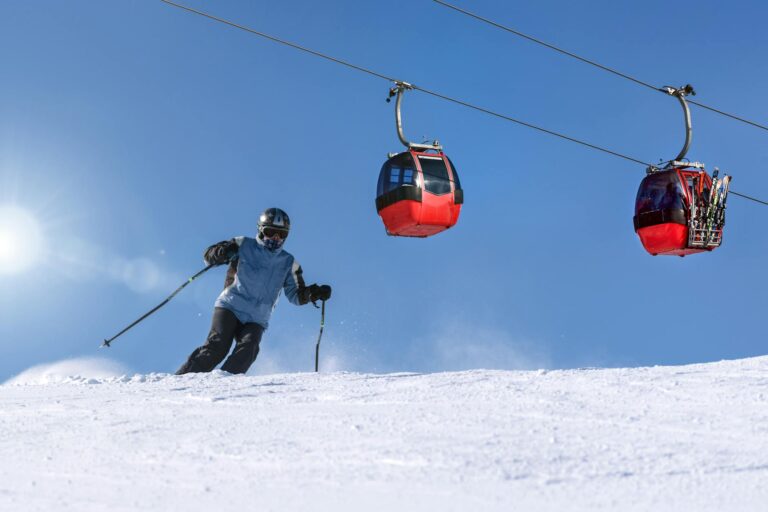
Downhill skiing gives your heart a solid workout while building the stamina you need for longer, tougher activities. It mixes bursts of speed with steady effort, pushing your cardiovascular system in ways that lead to real health gains.
When you ski downhill, your body works hard to handle the slopes. You bend your knees, shift your weight, and turn quickly, which gets your heart pumping faster. This raises your heart rate into the aerobic zone, where it strengthens the muscle and improves how blood flows through your veins. Studies show that activities like skiing help cut the risk of sudden cardiac events by up to 50 percent when done regularly, like 30 minutes a day or four hours a week at a moderate to vigorous pace.[1] The effort also boosts cardiorespiratory fitness, measured in METs, where even small gains lower heart risks by 14 to 22 percent per level.[1]
Skiing builds endurance because it lasts for hours on the mountain. Each run demands repeated climbs via lifts and descents that engage your legs, core, and arms. This full-body action trains your muscles to use oxygen better, letting you go longer without tiring out. Cold mountain air adds to this by lowering your heart rate and sweat loss compared to warm-weather exercise, so you can push harder and build stamina more efficiently.[2] Over time, your body adapts, turning stored fat into energy-burning types and improving overall aerobic capacity, much like cycling or running prep work for skiers.[3]
The sport also aids heart health through better circulation. Gliding down slopes and balancing on uneven snow promotes steady blood flow, which fights issues like high blood pressure.[2][4] Being in crisp mountain air and nature boosts these effects, as outdoor cold exercise strengthens your system against common winter illnesses while enhancing recovery.[2] Regular sessions, even 60 minutes a week, link to lower chances of heart attacks and related problems.[2]
To get these benefits, start with proper warm-ups like squats and hip exercises to ready your body for the demands. Build up gradually to avoid strain, focusing on steady sessions that mix intensity with recovery.[3]
Sources
https://pmc.ncbi.nlm.nih.gov/articles/PMC12715147/
https://www.expeditiondetroit.com/post/health-benefits-cold-weather-exercise
https://health.clevelandclinic.org/ski-workout
https://educoeur.org/en/my-daily-life/physical-activity/mountains-friend-or-foe-for-the-heart/
Check the New post