Yes, cycling workouts absolutely count toward your weekly running and cardio goals. Whether you’re hitting the road on a road bike, grinding on a stationary bike at the gym, or crushing trails on a mountain bike, these sessions provide the same cardiovascular benefits as running and can be seamlessly integrated into any weekly training plan that measures aerobic activity. The key factor is intensity and duration—a 45-minute moderate-intensity cycling session burns comparable calories to a 4-mile run and delivers the same heart-rate training stimulus your body craves.
The reason cycling works so well as a complementary or substitute activity is that it stresses your cardiovascular system in nearly identical ways to running, without the repetitive impact on your joints. A cyclist sustaining 75-85% of their maximum heart rate for an hour is building aerobic capacity at the same rate as a runner doing the same workout. For instance, someone with a weekly goal of 150 minutes of moderate-intensity cardio could log 60 minutes cycling on Monday, 50 minutes running on Wednesday, and 40 minutes on the stationary bike Friday—all counting equally toward that target.
Table of Contents
- How Do Cycling Workouts Compare to Running for Weekly Goal Progress?
- Understanding Intensity Zones and How They Affect Your Goal Credit
- Cross-Training Benefits When Cycling Replaces Running Workouts
- Building a Balanced Weekly Plan That Includes Cycling
- Power Output, Heart Rate, and Ensuring Accurate Goal Tracking
- Stationary Bike Versus Outdoor Cycling for Goal Accumulation
- Seasonal Cycling and Long-Term Goal Planning
- Conclusion
- Frequently Asked Questions
How Do Cycling Workouts Compare to Running for Weekly Goal Progress?
Cycling and running are metabolically similar enough that fitness trackers and most training plans treat them interchangeably when measuring cumulative aerobic work. The intensity of the cycling matters more than the format. A leisurely 20-minute bike ride will not accumulate the same way a steady 30-minute run will, but a fast-paced 20-minute cycling interval session absolutely will. This is why understanding the intensity is crucial—you can’t just rack up casual miles and expect serious goal progress.
The difference between running and cycling becomes apparent when you look at lactate threshold work. A runner building speed through tempo runs trains the same metabolic pathway as a cyclist doing threshold intervals on a climb. If you run a 7-minute-per-mile tempo run for 20 minutes, you’re pushing harder physiologically than if you coast along at 12 mph on flat ground. The same logic applies in reverse: a cyclist hammering a 6-minute climb effort is working at a comparable intensity to a runner doing a speed workout. One runner completing a 5-mile tempo run at 7:30 per mile achieves roughly the same training stimulus as a cyclist sustaining a hard 20-minute climb at 200+ watts.
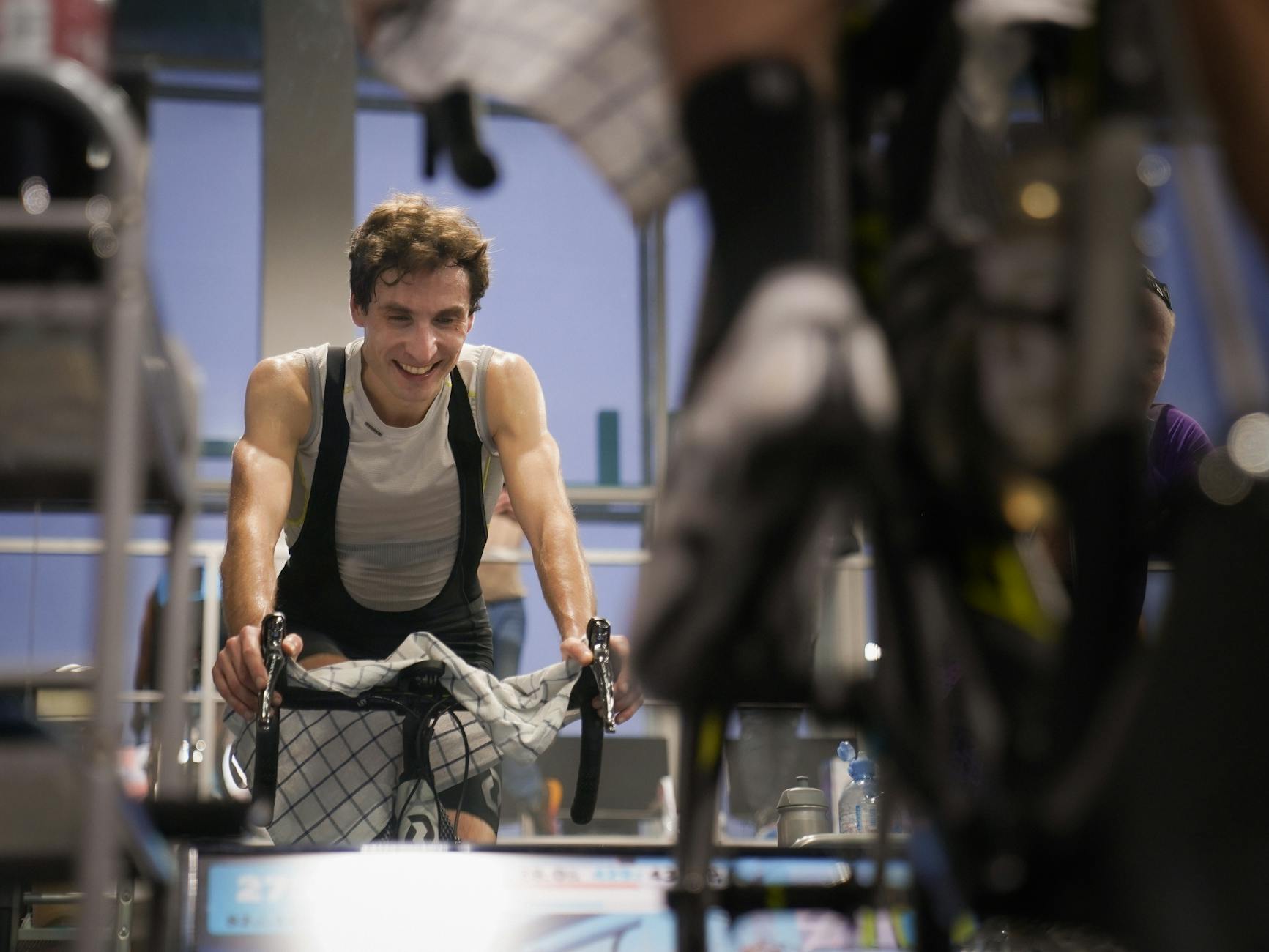
Understanding Intensity Zones and How They Affect Your Goal Credit
Not all cycling carries equal weight toward your weekly targets, and this is where many people miscount their progress. Gentle recreational cycling—the kind where you can hold a full conversation without breathing hard—sits in Zone 1 or 2 (50-69% of maximum heart rate) and logs much slower progress toward goals than zone 3 or 4 work (70-85%+ max heart rate). A 90-minute casual Sunday spin with friends might barely register as 30 minutes of “goal-quality” work, while a 45-minute structured interval session on the bike counts fully. The trap many cyclists fall into is assuming that time spent on the bike automatically equals progress.
Someone pedaling at a conversation-friendly pace for two hours might think they’ve earned 120 minutes of credit, but from a physiological standpoint, they may only have generated 40 minutes of actual aerobic stimulus. Your body’s adaptation depends on sustained heart rate elevation, not seat time. A warning worth heeding: if you’re cycling as your primary way to hit a running goal, make sure at least 60% of your weekly cycling is done at moderate intensity or harder. Mixing easy recovery rides with hard efforts is smart periodization, but if your entire cycling volume is easy, goal progress stalls.
Cross-Training Benefits When Cycling Replaces Running Workouts
Cycling into your weekly goal structure offers a major advantage that pure running does not: injury recovery. A runner nursing a minor knee irritation can maintain full aerobic fitness by switching to cycling for 2-3 weeks while the joint settles down. The non-impact nature of pedaling means no jarring forces on the knees, hips, or ankles, making it ideal active recovery that still chips away at weekly targets. Many elite runners build cycling sessions into their plans specifically to reduce cumulative impact stress while keeping fitness intact. Consider a runner whose goal is 180 minutes of aerobic work per week.
In weeks 1 and 3, they might run all 180 minutes. But in week 2, after a hard running workout cycle, they shift to 120 minutes of running and 60 minutes of cycling, spreading the impact stress while hitting the same total target. This pattern prevents the overuse injuries that emerge when athletes push the same movement pattern too hard for too long. One caveat: cycling uses different muscle groups with different intensities than running does. Your quads and glutes do more work on the bike, while your calves and hip stabilizers engage differently during running. Alternating both modalities actually builds more balanced leg strength than doing either alone.

Building a Balanced Weekly Plan That Includes Cycling
The most practical approach is to treat cycling as a tier-one contributor to your aerobic weekly goal, meaning you count it minute-for-minute at equivalent intensities. A simple framework: pick 2-3 days per week for running and 1-2 days for cycling, ensuring that together they hit your target. If your goal is 180 minutes weekly, you might run 50 minutes on Monday (tempo), 40 minutes on Wednesday (easy), and 50 minutes on Saturday (long run), then add 40 minutes of cycling on Thursday at threshold effort. Total: 180 minutes, mix of surfaces, appropriate stimulus variety. The tradeoff with this approach is that you need to understand your body’s response to both activities.
Some runners find that hard cycling sessions make their legs feel heavy for subsequent runs, while others bounce back fine. Personally observing how your body responds to back-to-back run-then-cycle or cycle-then-run days is essential. A warning: do not alternate hard running and hard cycling on consecutive days unless you have a solid aerobic base. Recovery matters. A beginner who runs hard on Monday and cycles hard on Tuesday risks overtraining and burnout far faster than someone alternating hard efforts with easy days in between.
Power Output, Heart Rate, and Ensuring Accurate Goal Tracking
One challenge with cycling is that different bikes and conditions produce wildly different perceived efforts. A stationary bike set to a low resistance feels easier than it is; an outdoor bike climbing real hills feels harder. This means heart rate and perceived exertion matter more than raw speed or watts when counting cycling toward your goals. A cyclist averaging 15 mph on flat ground might sit at zone 2, while averaging 12 mph uphill lands them in zone 4. The numbers lie; the heart rate tells the truth.
If you’re using fitness trackers or running apps to log cycling, be aware that most calculate calories burned and intensity using generic algorithms that may not match your actual effort. A Garmin or Apple Watch will estimate your work based on heart rate and movement, but cycling biomechanics are different enough that these estimates sometimes miss the mark. The safest approach is to log cycling by heart rate zone or perceived exertion level, not by raw data output. A limitation many people face is that their running goal tracker (like Strava for runners, or Apple Health) may not integrate cycling data seamlessly. You may need to manually log cycling minutes or use a multi-sport tracker to see an accurate weekly total.

Stationary Bike Versus Outdoor Cycling for Goal Accumulation
Stationary bikes offer one huge advantage: consistency. You control the resistance, duration, and intensity completely, making it easy to hit precise zone targets and count exact minutes toward your goal. A 45-minute indoor cycling session at steady zone 3 effort is exactly 45 minutes of goal-quality work. Outdoor cycling introduces variables—wind, terrain, traffic stops—that can disrupt your intended intensity.
One outdoor session might feel harder than intended, another easier, depending on conditions. For goal tracking purposes, outdoor cycling is perfectly valid but requires honest assessment of your actual effort. If you ride outdoors and include significant coasting or easy sections, only count the harder segments toward your weekly total. An example: a 60-minute outdoor ride with 20 minutes of easy spin, 30 minutes of moderate steady-state, and 10 minutes of hard climbing should count as approximately 40 minutes toward your goal (the moderate and hard portions), not the full 60. Stationary bikes eliminate this guesswork.
Seasonal Cycling and Long-Term Goal Planning
For runners in colder climates, cycling becomes especially valuable during winter months when running outdoors becomes dangerous or miserable. A runner in the Northeast might maintain their weekly aerobic goal completely via stationary cycling from November through March, then seamlessly transition back to outdoor running as weather improves. This isn’t settling for “less-than” running; it’s smart periodization that respects seasonal realities while keeping fitness on track.
Looking ahead, as wearable technology improves, tracking cycling and running as equivalent contributors to aerobic goals will become more intuitive. Right now, manual oversight is still necessary to ensure fair accounting. Building cycling into your training plan from the start—rather than treating it as an emergency fallback—sets you up for sustainable long-term progress and reduced injury risk.
Conclusion
Cycling workouts absolutely count toward your weekly running and cardio goals when done at appropriate intensity. Whether you’re logging stationary bike sessions or outdoor miles, the cardiovascular stimulus transfers directly to your aerobic fitness. The key is matching intensity and being honest about which portions of your rides actually challenge your cardiovascular system at the zone levels needed for genuine progress.
Start by adding one structured cycling session per week at a moderate or hard intensity, count it minute-for-minute toward your goal, and observe how your body responds. Most runners find that mixing 60-70% running with 30-40% cycling creates the most durable training plan—you get the specificity of running while gaining injury resilience from the non-impact work. If you’ve been cycling casually without counting it, start logging those hard efforts now.
Frequently Asked Questions
Can I count easy cycling toward my weekly goal?
Easy cycling (conversational pace, zone 1-2) should be counted at a reduced rate—roughly 50% of time spent—since the intensity is too low to generate meaningful aerobic stimulus. Save easy cycling for recovery days and count only moderate or hard efforts fully.
What heart rate zones should I target for cycling to count as “real” training?
Aim for zone 3 (70-80% max heart rate) or higher to count cycling minute-for-minute toward your goal. Zone 2 work counts as 50% of time spent, while zone 1 barely registers for goal progress.
Is indoor cycling on a stationary bike as effective as outdoor cycling?
Yes, indoor and outdoor cycling provide identical cardiovascular benefits at the same intensity. Indoor is more controllable for goal tracking; outdoor introduces environmental variables that make precision harder.
How do I know if my cycling effort is equivalent to my running effort?
Heart rate is your primary indicator. If you’re sustaining the same percentage of max heart rate and perceived exertion feels comparable, the training stimulus is equivalent regardless of whether you’re running or cycling.
Should I cycle the day before or after a hard run?
Easy cycling the day after a hard run works well as active recovery. Hard cycling the day before a hard run increases injury risk. Space hard efforts with at least one easy or rest day between them.
Will cycling build different muscles than running and affect my running performance?
Yes, cycling develops quads and glutes more intensely than running does. This imbalance is actually beneficial—it builds complementary strength. Just ensure you maintain running-specific calf and hip stability work.