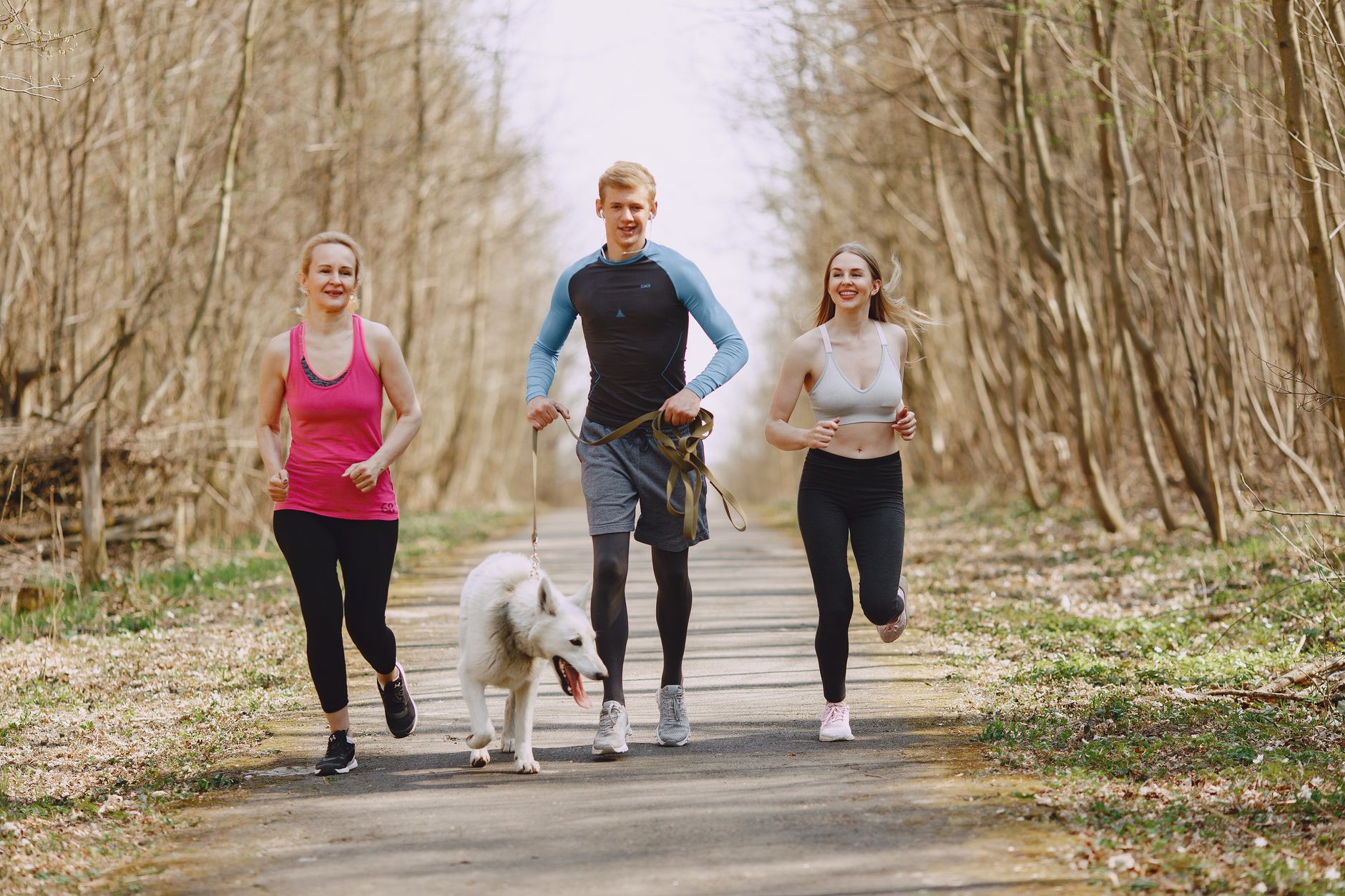
A running-with-dog training plan means short walk-jog runs on set days, separated by rest or easy-walk days. Start with 5-15 minute jogs one or two times per week, then add time or distance only when your dog holds pace. Walk-jog alternation means switching between walking and easy jogging within the same outing. It lets joints, paws, and stamina adjust without too much stress too soon.
Medical information disclaimer: This article is for general educational purposes only and does not provide medical advice, diagnosis, or treatment. Always consult a physician or other qualified health professional about symptoms, medications, tests, or treatment decisions.
Table of Contents
- Is your dog ready to run?
- How often should you run together?
- How do you build distance and speed?
- How do rest, warm-up, and daily care fit in?
- When should you skip or stop the run?
Is your dog ready to run?
Ask a veterinarian for a pre-run exam to check joints, heart, and weight. Puppies need more time because bones are still growing. According to the American Kennel Club, owners should wait until about 1.5 years old, or 18-24 months for large breeds, before steady running AKC training guidance.
Medium and large dogs generally suit longer runs, while smaller dogs suit shorter runs. Tailor the plan to breed, age, obesity, and health needs. A senior dog, flat-faced breed, or dog with extra weight needs a shorter, cooler, slower program.
How often should you run together?
Begin with one or two runs per week plus rest days. Keep early jogs to 5-15 minutes and use walks on the other days. Recovery guidance favors alternating run days with rest or easy-walk days.
According to Rover, endurance dogs need rest days like humans to recover and avoid overuse injuries Rover winter running guide. Watch effort across the week, not one outing. If the dog lags, slows, or seems stiff the next day, keep the same load another week before adding more.
How do you build distance and speed?
Start with low-impact walk-jog alternation for short distances. According to VCA Canada hospitals, runners should build endurance first before adding speed or distance because too much too soon raises injury risk VCA Canada running guide. Add about 5-10 minutes or 200-500 meters only when the dog holds pace without lagging.
Hold that new level for several outings before the next increase. Keep early pace conversational for you and comfortable for the dog. End the run while the dog still looks strong, not tired.
How do rest, warm-up, and daily care fit in?
Use rest days for free sniff walks, light play, and normal meals and sleep. Give a short walking warm-up before jogging and an easy walking cool-down after. Keep body condition lean, bring water, and keep nails and pads in good shape.
Overweight dogs stress ligaments and joints and face higher musculoskeletal injury risk. Seek prompt veterinary care for a limp, swelling, or pain that does not settle quickly. Pausing early often turns a small strain into a short break instead of a long layoff.
When should you skip or stop the run?
Run in cool morning or evening hours, choose shade, and check pavement heat with your hand. Flat-faced, senior, thick-coated, dark-coated, and obese dogs overheat faster. Stop for heavy panting, weakness, limping, or slowing.
Offer water and shade, cool the dog, and seek veterinary care if collapse threatens. Skip hot, humid runs entirely for high-risk dogs. A short cool walk protects fitness better than a forced hot run.
2 thoughts on “Running with Dog Training Plan: Frequency, Intensity, and Rest”
Comments are closed.