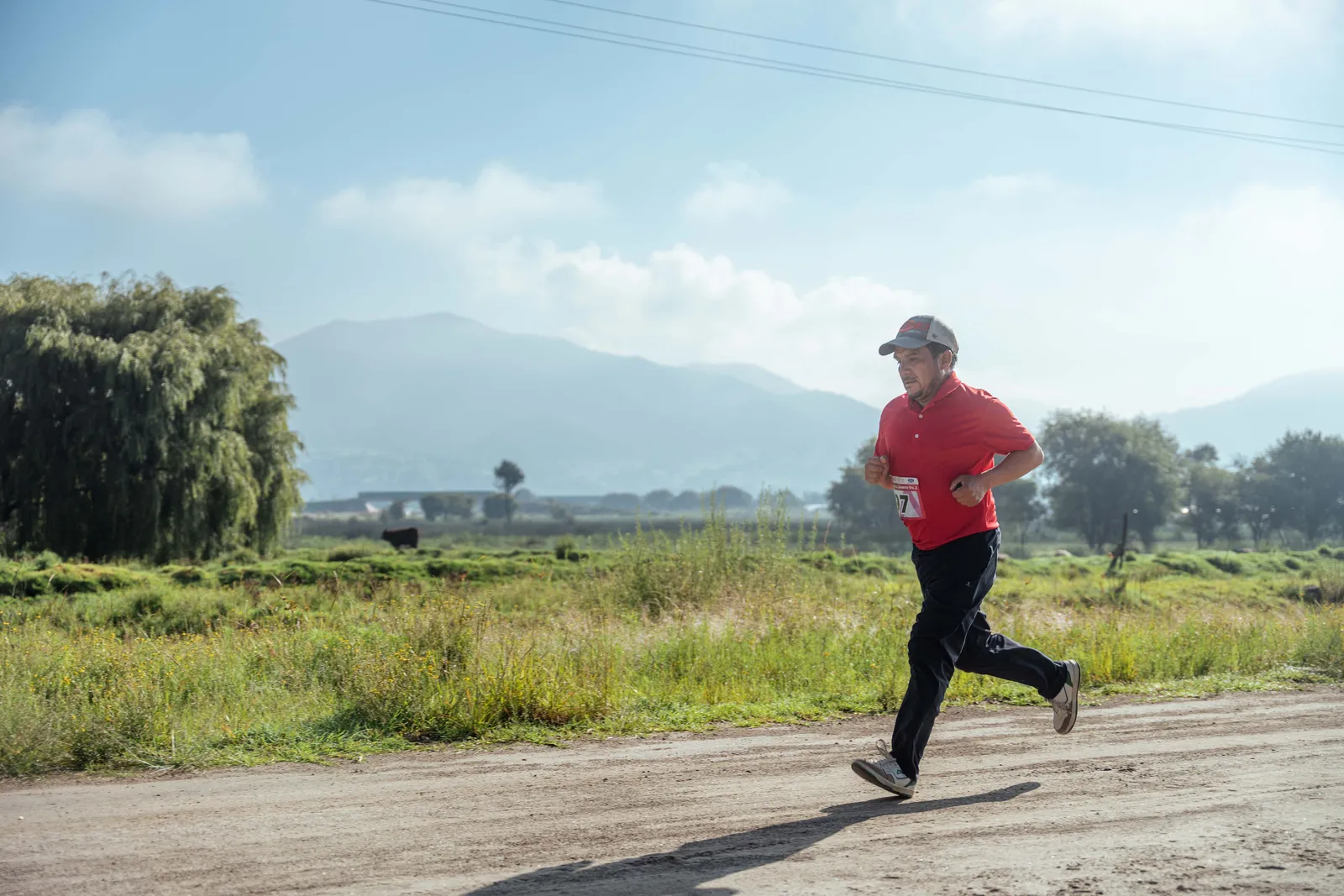
Most runners who take a statin can keep training, and most muscle aches reported by people on statins turn out not to be caused by the drug [3]. A small share of aches really are statin-related, though, and statin users have shown a bigger rise in a muscle-damage marker after a marathon than runners not on statins [8]. The useful skills are telling the patterns apart, knowing the rare red flags, and bringing good information to your doctor, who makes any change to the prescription.
What statin-associated muscle symptoms are
Doctors use the term statin-associated muscle symptoms (SAMS) for aches, cramps, stiffness or weakness that appear while someone is taking a statin. A European Atherosclerosis Society consensus panel describes the typical picture this way [1]:
- Location: usually symmetrical and proximal, in large muscle groups such as the thighs, buttocks, calves and back.
- Timing: usually within 4 to 6 weeks of starting a statin, though symptoms can appear after years of treatment. New symptoms can also follow a dose increase or a newly added drug that interacts with the statin.
- After stopping: symptoms are more likely to be statin-related if they fade markedly within a few weeks of stopping the statin under medical supervision.
The same panel notes that muscle symptoms appear to be more frequent in physically active people, and lists a high level of physical activity as a risk factor [1]. For runners, symptoms are possible and the training itself makes them harder to read.
How common they really are
An American Heart Association scientific statement reports that roughly 10% of US patients stop a statin because of subjective complaints, most often muscle symptoms without a raised creatine kinase (CK, an enzyme that leaks from damaged muscle) [2]. In blinded randomized trials, though, the difference in muscle symptoms between statin and placebo groups was under 1% [2].
The largest analysis to date pooled individual data from 19 double-blind trials with 123,940 participants. Over a median follow-up of about 4.3 years, 27.1% of people on a statin and 26.6% on placebo reported muscle pain or weakness [3]. In the first year, the statin caused a small excess, but the authors estimated that only about 1 in 15 muscle reports in the statin group was actually due to the statin. After the first year there was no significant excess [3]. Higher-intensity regimens carried a slightly higher relative risk than moderate ones [3].
The trials of people who had already quit
Two trials tested people who believed statins had caused their symptoms:
- StatinWISE enrolled 200 UK patients who had stopped, or were thinking of stopping, a statin because of muscle symptoms. Each rotated through six blinded two-month periods of atorvastatin 20 mg or placebo. Muscle symptom scores did not differ between statin and placebo periods, and two thirds of those who completed the trial said they were restarting long-term treatment [4].
- SAMSON gave 60 people who had abandoned statins twelve one-month bottles: four of atorvastatin 20 mg, four of placebo and four empty. Daily symptom scores averaged 8.0 in no-tablet months, 16.3 in statin months and 15.4 in placebo months. About 90% of the symptom burden that came with taking a statin also came with taking a placebo [5].
SAMSON has a lesson for self-diagnosis: neither how strongly symptoms began on starting a bottle nor how much they eased on stopping distinguished statin from placebo [5]. Relief after stopping a pill feels like proof, but in that trial the same pattern showed up with dummy tablets.
None of this means your aches are imaginary. Expectation can produce real symptoms (the nocebo effect), and a minority of people have a true drug effect; the National Lipid Association recognizes both [6].
Training soreness or statin symptoms?
No single feature settles it, but the pattern helps. This table compares what the sources above describe for statin-related symptoms with how ordinary training soreness usually behaves.
| Feature | Usual training soreness | Possible statin-related symptoms | Red flag: get help now |
|---|---|---|---|
| Link to running | Follows a hard, long, hilly or unfamiliar session | Present regardless of what you ran; may be there on rest days | Severe pain out of proportion to the effort |
| Where | The muscles that did the work, sometimes one side more | Usually both sides, large muscles: thighs, buttocks, calves, back [1] | Muscles very tender or weak [10] |
| Timing | Fades over a few days as you recover | Often within 4 to 6 weeks of starting, after a dose increase, or after a new interacting drug [1] | Comes with dark, red or brown urine, or reduced urine output [10][11] |
| Other signs | Stiffness and tenderness in the muscles you worked | Aching, cramps or heaviness without an obvious training cause | Fever or unusual fatigue alongside muscle pain [10][11] |
A simple log makes the conversation with your doctor much more productive: when the aches started, which muscles, both sides or one, what you ran in the 48 hours before, and whether anything else changed, such as a new medicine, a dose change, or a jump in mileage.
The rare serious problem: rhabdomyolysis
Rhabdomyolysis is a breakdown of muscle tissue that releases its contents into the blood and can harm the kidneys. The AHA puts the risk of statin-induced serious muscle injury, including rhabdomyolysis, below 0.1% [2]. Both statins and severe exertion such as marathon running are listed causes [10].
Symptoms listed by the US National Library of Medicine include dark, red or cola-colored urine, decreased urine output, general weakness, muscle stiffness or aching, muscle tenderness and weakness of the affected muscles [10]. The NHS describes the statin-related version as muscle cramps, severe pain and weakness, sometimes with a high temperature and red or brown urine, and advises urgent medical help if you think it is happening [11].
What the research says about statins and exercise
Strength and exercise capacity
The STOMP trial gave 420 healthy adults who had never taken a statin either atorvastatin 80 mg, a high dose, or placebo for six months. There were no significant changes in several measures of muscle strength or exercise capacity on the statin [7]. More people on atorvastatin than placebo developed myalgia (19 vs 10), and average CK rose modestly, by about 21 U/L [7]. The authors read the CK rise as mild muscle injury even without symptoms.
The marathon study
Researchers took blood from 37 statin users and 43 runners not on statins around the 2011 Boston Marathon. Twenty-four hours after the race, CK had risen more in the statin users (average about 1,104 U/L, from 133) than in the controls (about 813 U/L, from 125) [8]. In the statin group, but not the controls, the size of the rise was linked to age. The authors concluded that statins increase exercise-related muscle injury [8].
Training adaptations
One small trial randomized sedentary, overweight or obese adults with metabolic syndrome risk factors to 12 weeks of aerobic training with or without simvastatin 40 mg. Of the 37 who finished, cardiorespiratory fitness rose 10% with exercise alone but only 1.5% with exercise plus simvastatin. Mitochondrial enzyme activity in the thigh muscle rose in the exercise-only group and fell in the statin group [9]. The trial was small, used one statin, and studied people who were not trained runners. It raises a question; it does not settle how statins affect fitness gains in runners. For the broader evidence on fitness gains with age, see what studies show about older runners raising VO2 max.
Practical points for training on a statin
- Tell your doctor you run, and how much. The EAS panel notes that minor CK elevations are commonly due to exercise [1]. A blood test taken the day after a long run or race can look worse than your baseline, so mention recent hard efforts when a CK test is ordered.
- Change one thing at a time. If your statin or dose changes in the same week you add speedwork or a long run, you cannot tell which caused new aches. A planned easier week helps; see why every third or fourth week drops down.
- Mention every other medicine and supplement. New symptoms can follow the start of a drug that interacts with a statin [1], and your doctor or pharmacist can check for that.
Why the prescription decision belongs to your doctor
A statin is prescribed to lower the risk of heart attack and stroke (for how cholesterol testing feeds that decision, see LDL particle size and runners), and the CTT authors concluded that the small risk of muscle symptoms is much lower than the known cardiovascular benefits [3]. If symptoms persist, clinicians have more options than stopping. The National Lipid Association recommends trying different strategies, such as a different statin, a different dose or a different dosing frequency, and says at least two statins, including one at the lowest approved daily dose, should be tried before a patient is labeled statin intolerant [6]. Non-statin medicines exist for people who cannot reach their goals on a statin [6]. Weighing those options against your heart risk takes your full history and test results, so leave dose changes to that conversation.
When to talk to your doctor
Get urgent medical help if you have severe muscle pain or weakness, especially with dark, red, brown or cola-colored urine, reduced urine output, or a fever [10][11]. This applies whether the trigger seems to be the statin, a race, or both.
Book a routine appointment if you have:
- Aching, cramps or weakness in both thighs, hips, calves or back that do not track with your training and have lasted more than a few days.
- New muscle symptoms after starting a statin, raising the dose, or adding another medicine [1].
- Muscle weakness that makes stairs, getting up from a chair or your usual runs noticeably harder.
- Symptoms that are making you think about skipping doses. Your doctor needs to know that before you act on it.
Muscle strength matters for runners over 50 in its own right; muscle loss after 50 is not inevitable, and keeping strength work in your week is part of the plan whatever your prescription.
Sources
- Stroes ES, Thompson PD, et al. Statin-associated muscle symptoms: impact on statin therapy. European Atherosclerosis Society Consensus Panel Statement on Assessment, Aetiology and Management. Eur Heart J. 2015;36(17):1012-1022. PMID 25694464. PMC4416140
- Newman CB, Preiss D, et al. Statin Safety and Associated Adverse Events: A Scientific Statement From the American Heart Association. Arterioscler Thromb Vasc Biol. 2019;39(2):e38-e81. PMID 30580575. PubMed
- Cholesterol Treatment Trialists’ Collaboration. Effect of statin therapy on muscle symptoms: an individual participant data meta-analysis of large-scale, randomised, double-blind trials. Lancet. 2022;400(10355):832-845. PMID 36049498. PubMed
- Herrett E, Williamson E, et al. Statin treatment and muscle symptoms: series of randomised, placebo controlled n-of-1 trials (StatinWISE). BMJ. 2021;372:n135. PMID 33627334. PubMed
- Howard JP, Wood FA, et al. Side Effect Patterns in a Crossover Trial of Statin, Placebo, and No Treatment (SAMSON). J Am Coll Cardiol. 2021;78(12):1210-1222. PMID 34531021. PubMed
- Cheeley MK, Saseen JJ, et al. NLA scientific statement on statin intolerance: a new definition and key considerations for ASCVD risk reduction in the statin intolerant patient. J Clin Lipidol. 2022;16(4):361-375. PMID 35718660. PubMed
- Parker BA, Capizzi JA, et al. Effect of statins on skeletal muscle function (STOMP). Circulation. 2013;127(1):96-103. PMID 23183941. PubMed
- Parker BA, Augeri AL, et al. Effect of statins on creatine kinase levels before and after a marathon run. Am J Cardiol. 2012;109(2):282-287. PMID 22036108. PubMed
- Mikus CR, Boyle LJ, et al. Simvastatin impairs exercise training adaptations. J Am Coll Cardiol. 2013;62(8):709-714. PMID 23583255. PubMed
- MedlinePlus (US National Library of Medicine). Rhabdomyolysis. medlineplus.gov
- NHS. Side effects of atorvastatin. nhs.uk