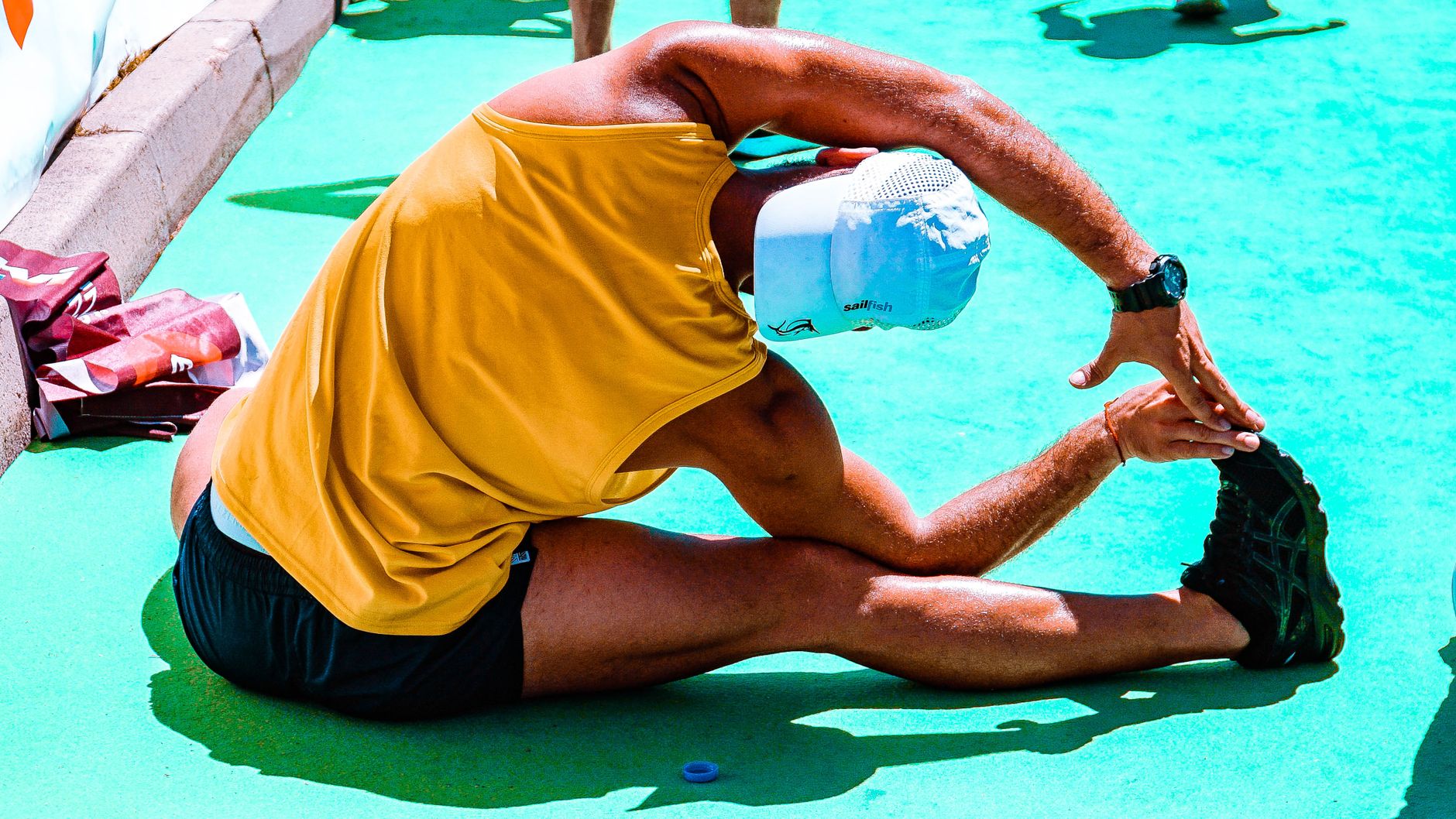
The quad stretch runner checklist covers the standing quad stretch, a warm-up and cool-down, planned fluids, and supportive, visible gear. A quad stretch lengthens the quadriceps, the large muscle group on the front of the thigh that straightens the knee for running. Use the checklist for road, trail, or track runs. Each step takes minutes and needs no gym equipment.
Medical information disclaimer: This article is for general educational purposes only and does not provide medical advice, diagnosis, or treatment. Always consult a physician or other qualified health professional about symptoms, medications, tests, or treatment decisions.
Table of Contents
- How do I do the standing quad stretch?
- How should I warm up and cool down?
- What should I drink before, during, and after?
- What gear keeps runs comfortable and visible?
How do I do the standing quad stretch?
Hold a wall for balance and pull one heel toward the buttock. Keep knees close together until you feel the front thigh stretch.
Mayo Clinic describes this exact move in Mayo Clinic's knee exercises and advises holding about 30 seconds per side. Do the stretch while muscles are still warm, not cold. Walking plus stretching after a run works better than stretching stiff, cold legs.
- Hold a wall or rail with one hand
- Pull right heel toward buttock with knees together
- Hold about 30 seconds, then switch sides
How should I warm up and cool down?
Warm up for 5-10 minutes with light cardio and mobility before hard running. The American Heart Association explains in American Heart Association warm-up guidance that this raises heart rate, blood flow, and muscle temperature and reduces cardiac strain.
Cool down by walking, then stretch. Stopping suddenly can cause lightheadedness from a rapid blood-pressure drop and prolong stiffness.
- Start with brisk walking, easy jogging, or cycling
- Add leg swings or gentle marching for mobility
- Finish with walking plus the standing quad stretch
What should I drink before, during, and after?
Pre-hydrate with about 5-10 mL fluid per kg body weight at least 4 hours before exercise, according to ACSM guidance summarized in the Nutrients review of ACSM guidelines. Drink small amounts through the day rather than a large bolus right before the start. During running, guidance from ACSM and NATA is about 400-800 mL per hour, adjusted to sweat rate.
The aim is to keep body-mass loss under 2%, because voluntary drinking replaces only about half of losses. After running, ACSM advises replacing about 1.5 L of sodium-containing fluid per kilogram lost, sipped gradually. Do not maximize plain water. Drinking excess plain water without sodium can cause hyponatremia with seizures, so NATA advises including sodium and electrolytes and matching intake to sweat plus urine losses.
What gear keeps runs comfortable and visible?
Choose road, trail, or track-specific shoes that feel comfortable immediately. The American Academy of Podiatric Sports Medicine advises firm heel grip, fit that works with socks or orthotics, and support for arch and pronation needs.
The American Podiatric Medical Association guidance sets replacement at 300-500 miles of wear. For low light, wear bright or reflective and LED gear and carry a headlamp. Mayo Clinic News Network advises staying on sidewalks or shoulders and running against traffic to see oncoming vehicles.