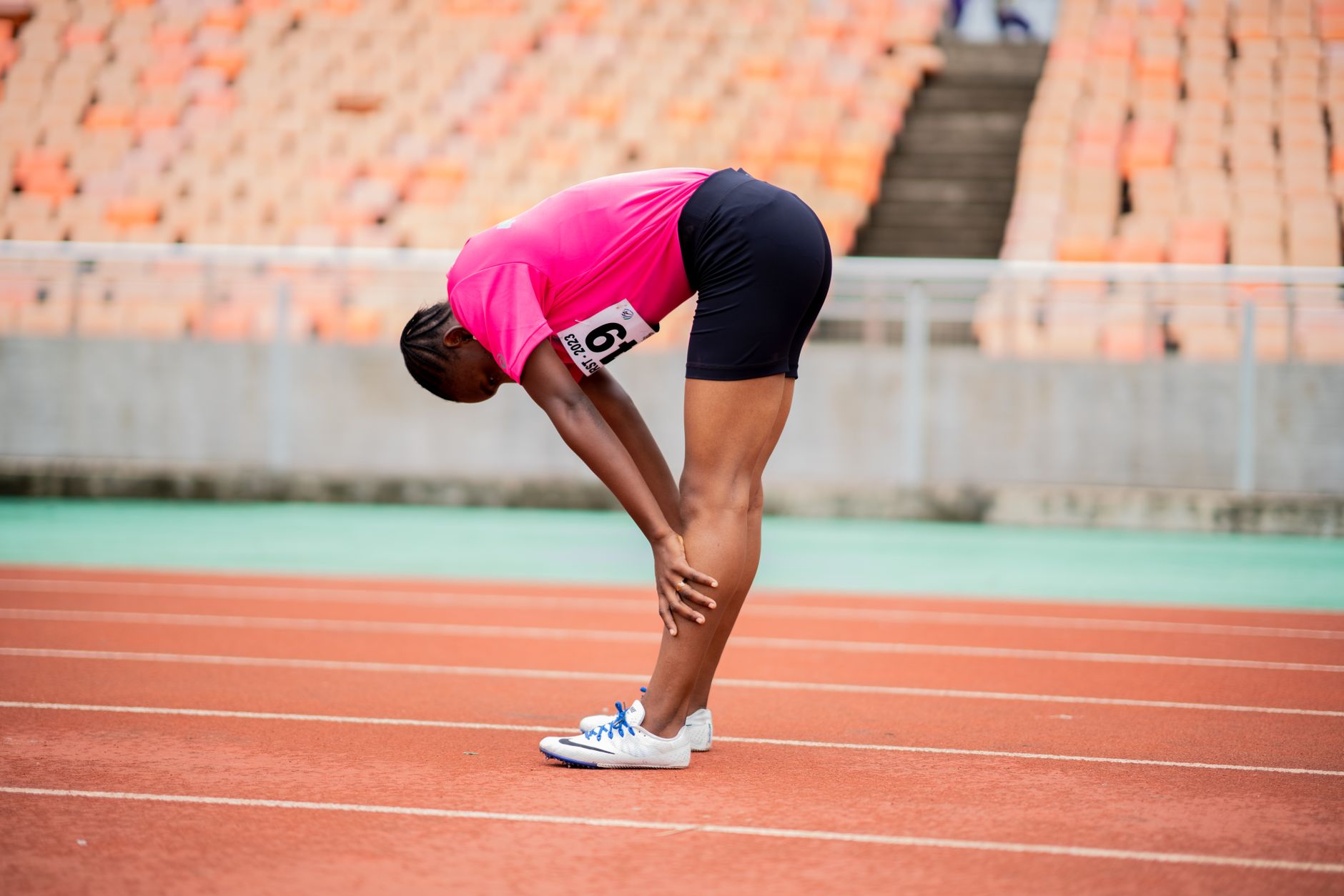
High hamstring tendinopathy is a mechanical-overload injury of the hamstring tendons at the sit-bone, causing deep buttock pain in runners. It is triggered by sudden volume, speed and hill loading, and rehab follows staged progressive loading from isometrics to running-specific work. The ischial tuberosity is the sit-bone you feel on a hard chair.
Mid- and long-distance runners and sprinters get this injury most often. Howard J. Luks, MD, describes deep buttock pain that can spread down the back of the thigh in his proximal hamstring guide.
Medical information disclaimer: This article is for general educational purposes only and does not provide medical advice, diagnosis, or treatment. Always consult a physician or other qualified health professional about symptoms, medications, tests, or treatment decisions.
Table of Contents
- What does it feel like?
- Why does training overload this tendon?
- What daily habits keep it irritated?
- How do you rebuild it for running?
What does it feel like?
The sit-bone is often tender to touch. Sitting for long periods hurts, especially on hard surfaces. Stairs, running and jumping also bring stiffness and pain.
Many runners hurt at the start of a run. Pain may ease during the run, then worsen afterward. That flare afterward helps separate tendon overload from simple tightness.
Why does training overload this tendon?
Tendons handle pulling well but handle compression poorly. High hip flexion presses the proximal tendon against the sit-bone during forceful contraction. Sports Injury Physio explains that overload happens when that compressed loading hits an under-prepared tendon or repeats without recovery in its runner tips.
Sudden rises in volume, intensity and speed work are primary triggers. New hill running and sprinting are high-risk because they combine deep flexion with strong contraction. Flawless Physio points to those newly added hills and sprints as common onset events in its tendinopathy breakdown.
What daily habits keep it irritated?
Deep static hamstring stretching compresses the proximal tendon over the sit-bone. It commonly aggravates symptoms rather than fixing tightness. Prolonged sitting does the same, especially leaning forward.
Hard chairs, long drives and couch slumps add repeated compression. Shorter sits, softer seats and upright posture reduce that load. Less daily compression lets rehab loading work.
How do you rebuild it for running?
Rehab starts with low-hip-flexion isometrics that avoid pinching the tendon. Michael Braccio, PT, outlines long-lever bridges held 30-45 seconds for 3-5 reps in his rehab walkthrough.
Strength then builds through concentric-eccentric and heavy slow resistance. A focused program plus less exposure to aggravators lessens pain and strengthens the tendon. Evidence has limits: in a 2011 case series of only 3 female long-distance runners, pain resolved after an average 13 conservative chiropractic plus active-rehab treatments while they kept competing.
- Start with low-flexion isometrics such as long-lever bridges.
- Add concentric-eccentric and heavy slow resistance.
- Progress to plyometric and running-specific loading.
- Pair eccentric hamstring work with lumbopelvic and core stabilization.