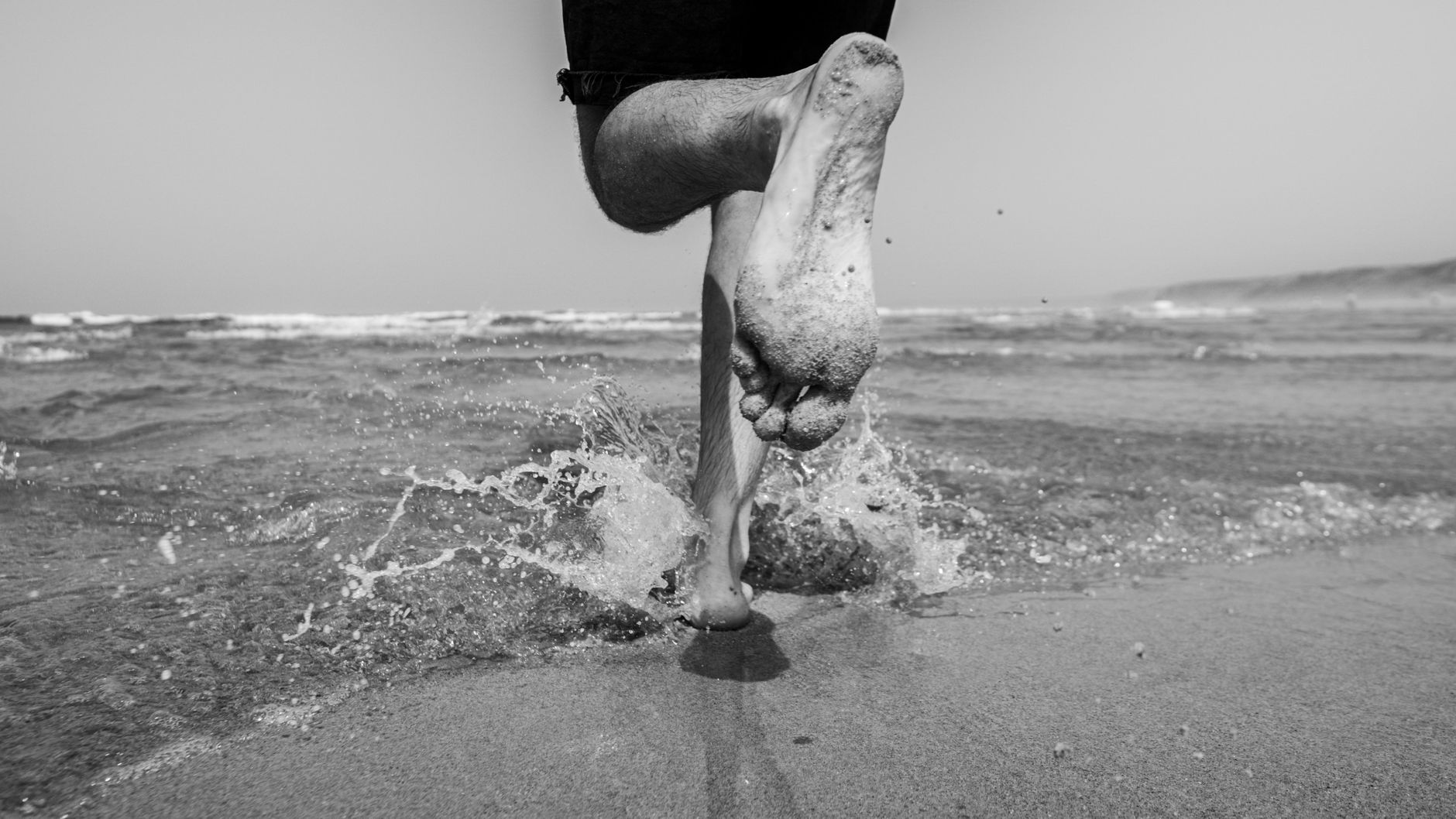
A safe barefoot-running checklist combines a 20-plus-week transition, foot-strength work, surface checks, and an individualized hydration plan. Barefoot running means running without cushioned shoes, so the foot lands more toward the forefoot or midfoot. That change shifts load toward the calves, Achilles tendons, and small foot muscles. Use the checklist below to control mileage growth, prepare tissues, protect skin, and replace fluids.
Medical information disclaimer: This article is for general educational purposes only and does not provide medical advice, diagnosis, or treatment. Always consult a physician or other qualified health professional about symptoms, medications, tests, or treatment decisions.
Table of Contents
- How fast should you add barefoot miles?
- What changes in stride and load?
- How do you prepare feet and ankles?
- What gear and surface checks matter?
- How should you hydrate before, during, and after?
How fast should you add barefoot miles?
La Trobe University researchers recommend transitioning over at least 20 weeks and keeping barefoot or minimalist distance growth within 20% of total weekly mileage, described in La Trobe transition guidance. That cap keeps total stress stable while the feet adapt.
Start with barefoot walking, then add short barefoot intervals into normal shod runs. La Trobe University also advises using pain during the run and in the next 24 hours as the stop-or-proceed signal.
What changes in stride and load?
Harvard anthropologist Daniel Lieberman's Nature study, reported by the Harvard Gazette, found habitually barefoot runners mostly land forefoot or midfoot with almost no impact collision, unlike heel-striking shod runners, explained in Harvard barefoot running findings. Less collision does not mean less work elsewhere.
A BMJ Open Sport and Exercise Medicine narrative review reports greater calf activation and Achilles loading in barefoot running. Its survey data counted more calf-Achilles injuries in barefoot runners, 14 versus 5, while shod runners reported more knee and plantar-fascia problems.
How do you prepare feet and ankles?
Preparation should rebuild the support system before adding mileage. The Setanta College barefoot-training presentation by Dr.
Mike Martino lists short-foot and arch lifts, toe curls, marble pickups, calf raises, ankle-mobility work, and single-leg balance. Practice these moves several days per week during the transition period. Keep reps smooth and controlled, with the arch lifted but the toes long.
- Short-foot hold: press the ball of the foot down, lift the arch, hold briefly.
- Toe curls and marble pickups: gather, lift, and release small objects.
- Calf raises: rise slowly, pause, lower slowly.
- Single-leg balance: stand tall, steady the ankle, progress with eyes closed only when stable.
What gear and surface checks matter?
Minimalist shoes reduce abrasion but do not remove the transition need. The American Podiatric Medical Association cautions that barefoot running removes protection, raising puncture-wound risk and lower-leg stress, and advises seeing a podiatrist first with flat feet or bunions.
Choose smooth, familiar ground and inspect for glass, stones, heat, and debris. Walk the route first, start with short intervals, and stop for hot spots, sharp pain, swelling, or altered gait.
How should you hydrate before, during, and after?
The National Athletic Trainers' Association 2017 position stand recommends individualized fluid plans based on sweat rate, duration, and heat, replacing only sweat lost and avoiding weight gain, detailed in NATA fluid-replacement position stand. That approach lowers exercise-associated hyponatremia risk.
For practical scheduling, US Navy Fitness guidance derived from ACSM advises pre-hydrating with about 15-20 oz two to three hours before, drinking about 8 oz every 15-20 minutes during runs, then replacing about 16-20 oz per pound lost, using sports drink beyond 60-90 minutes, outlined in Navy fitness hydration guidance. Weigh before and after long or hot runs to set the replacement amount.
1 thought on “Barefoot Running Checklist: Gear, Hydration, and Preparation”
Comments are closed.